Imagine handing over a mortgage payment every month just to keep your child safe while you work. For many families in Chicago, that’s not a metaphor-it’s the reality of childcare services for infants, toddlers, and preschoolers. If you’re moving to the Windy City or trying to balance a budget here, understanding the true cost is the first step to sanity. Prices vary wildly depending on where you live in the city, the age of your child, and whether you need full-time care or part-time flexibility.
The Big Picture: What You’ll Actually Pay
Let’s cut through the noise. In 2026, average monthly costs in Chicago have climbed significantly due to inflation and labor shortages. While national averages hover around $1,300, Chicago often exceeds this. Why? The cost of living index here is high, and demand outpaces supply in popular neighborhoods like Lincoln Park, Wicker Park, and Bucktown.
You might be asking, "Is it cheaper than New York?" Sometimes, but not by much when you factor in quality. A standard infant center can run you between $2,200 and $2,800 per month. Toddlers drop slightly to $1,900-$2,400. Preschoolers are usually the most affordable option among center-based care, ranging from $1,500 to $2,000 monthly. These numbers assume full-time attendance (typically 40 hours a week). If you’re looking at part-time schedules, expect to pay hourly rates rather than a discounted monthly fee, which can sometimes cost more in the long run.
Daycare Centers vs. Home-Based Providers
Not all childcare looks the same. When parents search for daycare licensed facilities providing group care, they usually mean large centers with multiple classrooms. These places offer structured routines, larger staff ratios, and often better benefits for employees, which translates to higher tuition. They are regulated by the Illinois Department of Children and Family Services (DCFS), ensuring strict safety standards.
On the other hand, home-based providers operate out of their own residences. These spots feel more like family environments. They often have smaller groups-maybe six kids instead of twenty-and mixed-age play. Because overhead costs are lower (no commercial rent), these providers can charge less. However, availability is scarce. Good home providers often have waitlists lasting months. If you find one, expect to pay $1,400 to $1,800 monthly for an infant. It’s a gamble on reliability; if the provider gets sick, there’s no backup staff.
| Care Type | Infant (0-12 mo) | Toddler (1-2 yr) | Preschool (3-4 yr) |
|---|---|---|---|
| Licensed Center | $2,200 - $2,800 | $1,900 - $2,400 | $1,500 - $2,000 |
| Home-Based Provider | $1,400 - $1,800 | $1,200 - $1,600 | $1,000 - $1,400 |
| Nanny (Live-out) | $3,200 - $4,000* | $3,000 - $3,800* | $2,800 - $3,500* |
| Au Pair | $2,500 - $2,800** | $2,500 - $2,800** | $2,500 - $2,800** |
*Nanny costs include estimated employer taxes and benefits.
**Au pair includes stipend, room, board, and education allowance.
Hiring Help: Nannies, Au Pairs, and Sitters
If centers feel too sterile or rigid, you might look into hiring help. This is where things get expensive fast. A full-time nanny private caregiver working in the family home in Chicago commands a premium. Hourly rates for experienced nannies range from $25 to $35. Multiply that by 40 hours a week, and you’re looking at $1,000 to $1,400 weekly. Add in payroll taxes, health insurance contributions, and paid time off, and the annual cost can hit $60,000.
Why so high? The market is tight. Many nannies prefer stable, long-term contracts. If you need someone for just a few days a week, you’ll struggle to find qualified candidates willing to split their time. Agencies charge hefty placement fees, often equal to one month’s salary. But the benefit is control. Your child stays in their own bed, eats familiar food, and follows your schedule. No driving across town in rush hour traffic.
An alternative gaining traction is the au pair young international visitor providing childcare in exchange for room, board, and stipend. This program allows young adults (ages 18-26) from abroad to live with host families. You provide a private bedroom, meals, and a weekly stipend (around $200-$220). You also cover their insurance and educational expenses. Total monthly cost hovers around $2,500. It’s cheaper than a nanny but requires cultural adjustment and strict adherence to State Department regulations regarding work hours.
Preschool Programs: Public vs. Private
Once your child turns three, the landscape shifts. Preschool early childhood education programs for ages 3-5 isn’t mandatory in Illinois, but most parents enroll kids to prepare them for kindergarten. Here, you have two main paths: public and private.
Chicago Public Schools (CPS) offers free full-day pre-K for eligible families. Income limits apply, but if you qualify, it’s a massive financial win. However, space is limited. Registration opens early, and lottery systems determine who gets in. Don’t count on it as a sure thing. If you miss the window, you’re back to paying.
Private preschools range from Montessori schools in Hyde Park to Reggio Emilia-inspired centers in Lakeview. Tuition varies based on philosophy and reputation. A standard half-day program might cost $1,000 monthly. Full-day programs at prestigious institutions can reach $2,500. Some schools offer sliding scale tuition based on income. Always ask about hidden fees: registration deposits, material costs, and field trip charges add up quickly.
Hidden Costs and Financial Aid Options
Tuition is just the headline number. You need to budget for extras. Most centers require a non-refundable registration fee ($100-$500). There are supply fees for diapers, wipes, and art materials. Late pickup fines are real-some charge $1 per minute after grace periods end. That sounds small until you’re stuck in CTA delays and owe $50 for being ten minutes late.
Thankfully, help exists. The Illinois Department of Human Services (DHS) provides childcare assistance for low-income families. Eligibility depends on household size and income relative to the federal poverty level. Apply online via the Benefits.gov portal. Even middle-class families might qualify for partial subsidies. Check if your employer offers Flexible Spending Accounts (FSA) for dependent care. Putting pre-tax dollars toward childcare saves you roughly 20-30% depending on your tax bracket. It’s free money if you don’t use it.
Neighborhood Variations: Where You Live Matters
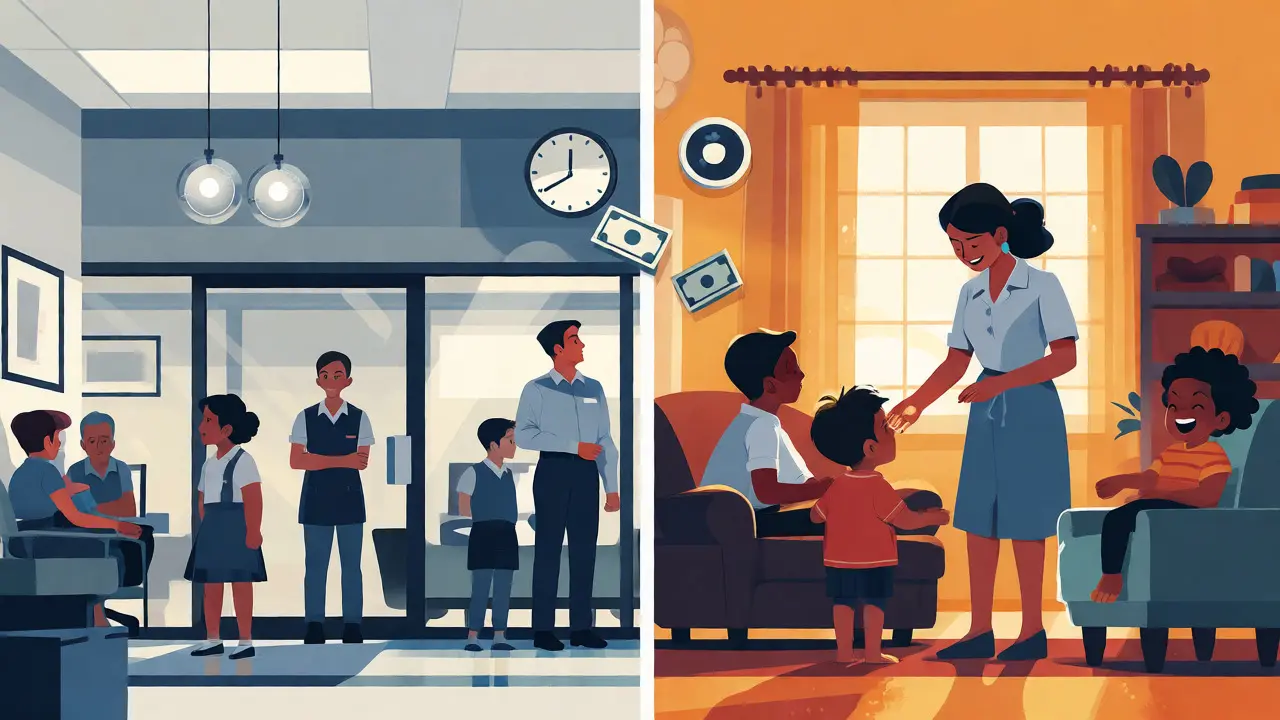
Childcare costs aren’t uniform across Chicago. Neighborhood demographics drive pricing. In affluent areas like Gold Coast or Streeterville, centers cater to dual-income professionals with high disposable income. Expect prices at the top of the range. Conversely, neighborhoods like Austin or Englewood may have more home-based providers offering lower rates, though options might be fewer.
Commuting plays a role too. Living in suburbs like Evanston or Oak Park gives access to Chicago jobs but introduces transit costs. Driving into the Loop during rush hour adds gas and parking fees. Using the 'L' train is cheaper but slower. Factor transportation into your total childcare equation. Sometimes paying $200 more for a closer center saves you $300 in gas and stress.
Making the Right Choice for Your Family
There’s no single "best" option. It depends on your values, budget, and child’s temperament. Do you prioritize socialization? Choose a center. Need flexible hours? Hire a nanny. Want academic rigor? Look at private preschools. Visit facilities unannounced if possible. Talk to current parents. Ask about staff turnover rates-high turnover signals burnout or poor management.
Start your search early. Waitlists are common. Tour places in person. Trust your gut. If a place feels chaotic or unsafe, walk away. Money matters, but your peace of mind matters more. Calculate the net cost after subsidies and tax benefits. Compare it against potential earnings loss if one parent stays home. Sometimes, staying home is financially smarter than paying for premium care.
How much does full-time daycare cost in Chicago?
As of 2026, full-time licensed daycare centers in Chicago typically charge between $1,500 and $2,800 per month, depending on the child's age and the neighborhood. Infants are the most expensive, while preschoolers are generally cheaper.
Are there free preschool options in Chicago?
Yes, Chicago Public Schools (CPS) offers free full-day pre-K programs for eligible families based on income guidelines. However, spots are limited and assigned via a lottery system, so competition is high.
What is the average hourly rate for a babysitter in Chicago?
Standard babysitting rates in Chicago range from $20 to $30 per hour for one child. Rates increase by $2-$5 per additional child. Experienced sitters or those with specialized certifications may charge higher.
Does Illinois offer childcare subsidies?
Yes, the Illinois Department of Human Services provides childcare assistance for qualifying low-income families. Applications are processed through local community action agencies or online portals. Eligibility is based on household income and size.
Is hiring a nanny cheaper than daycare?
Generally, no. For a single child, daycare is usually cheaper. Hiring a full-time nanny in Chicago costs $3,000+ monthly including taxes and benefits. Nannies become cost-effective only when caring for multiple children simultaneously.