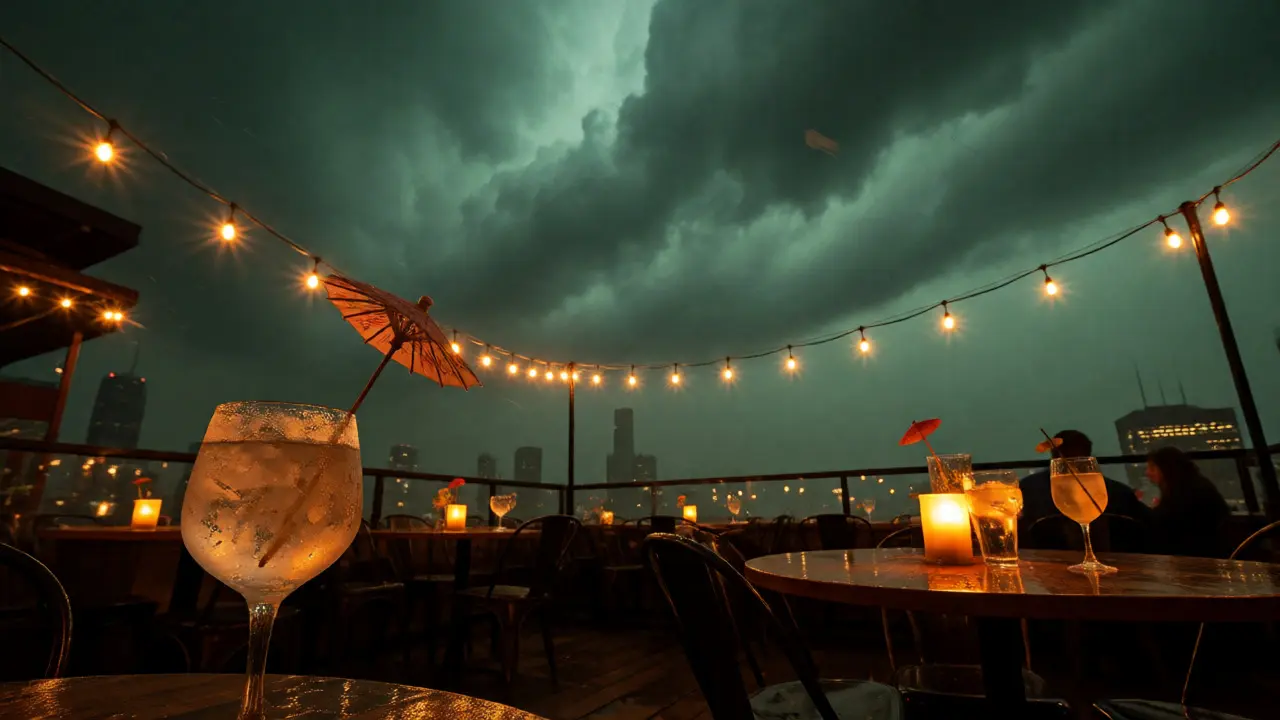
You’re sitting on a rooftop bar in the West Loop, enjoying a gin and tonic, when the sky turns that eerie shade of greenish-gray. The wind picks up, knocking over a cocktail umbrella three tables away. Then, the first crack of thunder hits so hard you feel it in your chest. If you’ve lived in Chicago for more than one summer, you know this drill. Chicago thunderstorms are not just background noise; they are a defining feature of the city’s summer identity. They are loud, violent, and often arrive with little warning.
But here is the thing most newcomers get wrong: they treat these storms like a minor inconvenience. They stay outside because "it looks like it will pass." Meanwhile, the National Weather Service (NWS) has already issued a Severe Thunderstorm Warning. This article breaks down exactly why Chicago gets hit so hard, what types of storms to expect, and how to keep yourself-and your car-safe when the sky opens up.
Why Does Chicago Get So Many Storms?
It isn’t bad luck. It’s geography. Chicago sits right at the intersection of several major atmospheric players. First, you have the Gulf of Mexico pumping warm, moist air northward along the Mississippi River Valley. Second, you have cold, dry air dropping down from Canada via the jet stream. When these two masses collide over the flat terrain of the Midwest, something explosive happens.
This collision zone is often referred to as "Tornado Alley"’s northern neighbor, but Chicago specifically benefits from its proximity to Lake Michigan. In July and August, the lake acts as a heat sink during the day and a moisture source at night. This creates instability in the lower atmosphere. You might hear locals talk about a "lake effect," but while that usually refers to winter snow, in summer, it fuels convection. Warm air rises off the heated land, meets the cooler air mass near the lake, and triggers rapid cloud formation. That’s why a sunny afternoon can turn into a monsoon-like deluge by 5 PM.
The Three Main Types of Chicago Storms
Not all thunderstorms are created equal. Understanding which type is approaching helps you predict what kind of damage to expect. Meteorologists generally categorize Chicago’s severe weather into three distinct patterns.
| Storm Type | Primary Threat | Duration | Typical Season |
|---|---|---|---|
| Supercells | Hail, Tornadoes, Extreme Wind | 1-3 hours | Late Spring (May-June) |
| Squall Lines | Widespread Wind Damage, Flash Flooding | 30-60 minutes | Summer (July-August) |
| Air Mass Thunderstorms | Lightning, Heavy Rain | 15-45 minutes | All Summer |
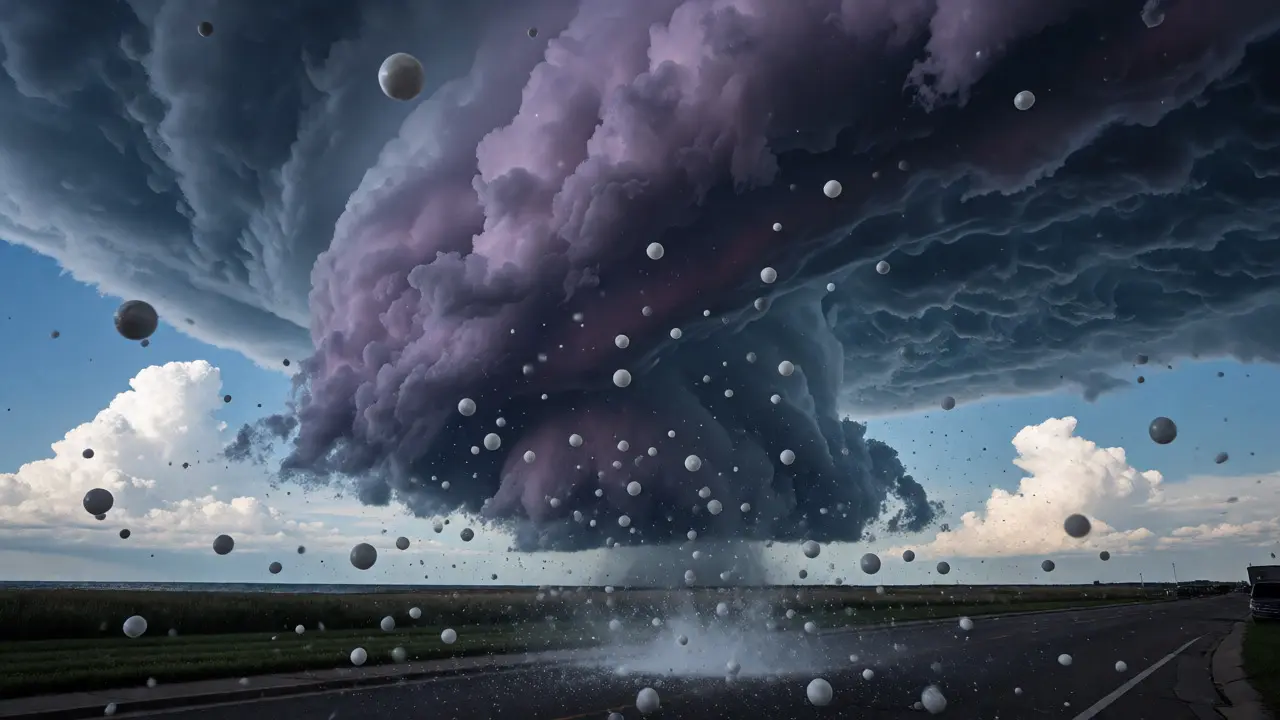
Supercells are the monsters. These are rotating updrafts that can last for hours. While tornadoes are rare in the city proper compared to rural Illinois, supercells frequently produce large hail. We’re talking baseball-sized or larger stones that can dent cars and shatter windows in seconds. If you see a wall cloud-a dark, lowered area beneath the storm base-get inside immediately.
Squall lines are the most common cause of widespread power outages. Imagine a long line of thunderstorms stretching across the horizon, moving rapidly east or northeast. Ahead of this line, you get a burst of straight-line winds that can exceed 60 mph. These winds don’t rotate like tornadoes, but they are powerful enough to snap mature trees and rip roofs off older bungalows. Because they move fast, the rain intensity is short but brutal, leading to instant flash flooding on streets like Clark Street or in low-lying areas like Pilsen.
Air mass thunderstorms are the isolated pop-ups. They form due to daytime heating rather than a frontal boundary. They are less organized but still dangerous because of frequent lightning strikes. These are the ones that ruin backyard barbecues unexpectedly.
Hail: The Silent Destroyer
If there is one thing Chicagoans dread more than the wind, it’s the sound of hail hitting a car roof. Hail forms when updrafts carry raindrops upward into extremely cold areas of the atmosphere where they freeze. They fall, get coated with more ice, rise again, and repeat until they are too heavy for the updraft to support.
In Chicago, hail events are surprisingly frequent. According to data from the National Centers for Environmental Information, Illinois consistently ranks among the top states for hail frequency. Why? Because the strong vertical wind shear (change in wind speed/direction with height) over the Great Lakes region supports deep convection. A typical Chicago hail event might drop stones ranging from pea-sized to quarter-sized. However, every few years, we see "gargantuan" hail. For instance, a storm in June 2024 dropped hailstones the size of tennis balls in the western suburbs. Even if the hail doesn’t destroy your home, it ruins paint jobs and dents metal siding. Insurance companies classify this as "comprehensive" coverage, so check your policy before the next big storm hits.
Lightning Safety: Don’t Be a Statistic
Lightning kills about 20 people per year in the United States, and many of those incidents happen during recreational activities. In Chicago, the danger zones aren’t just open fields-they are beaches, parks, and outdoor patios.
Here is the golden rule: When thunder roars, go indoors. If you can hear thunder, you are close enough to be struck by lightning, even if it’s raining heavily and visibility is poor. Lightning can strike up to 10 miles away from the center of a thunderstorm. This is known as a "bolt from the blue." It comes from the clear part of the sky, catches you off guard, and strikes without warning.
Do not shelter under a single tree. Trees are poor conductors and prone to splitting. Instead, seek substantial buildings or fully enclosed metal-topped vehicles. Avoid using corded phones, plumbing, or electronic devices connected to outlets during the peak of the storm. Cell phones are safe, but avoid charging them via wall outlets until the storm passes.
Flood Prep: The Urban Drainage Problem
Chicago was built on a swamp, literally. The city’s infrastructure struggles to handle sudden, intense rainfall. This is especially true in neighborhoods with older sewer systems or high impervious surface coverage (lots of concrete, little grass).
Flash floods occur when the ground becomes saturated and cannot absorb water quickly enough. In dense urban areas, water has nowhere to go but down into basements and onto streets. The Chicago Tunnel and Reservoir Plan (TARP), also known as Deep Tunnel, helps mitigate this, but it has limits. During extreme events, basement backups are common.
To protect your property, install a sump pump with a battery backup. Power outages often coincide with storms, rendering standard pumps useless. Also, ensure your downspouts extend at least six feet away from your foundation. If you live in a condo or apartment, ask your building management about their flood insurance status and emergency protocols. Keep sandbags handy if you are in a known flood-prone zone, such as parts of the South Side or near the river branches.
Real-Time Tracking Tools
Don’t rely solely on TV alerts, which can lag by several minutes. Use real-time radar apps. The NWS Chicago office provides detailed warnings and watches. Watches mean conditions are favorable for severe weather; warnings mean it is happening now.
Apps like RadarScope or MyRadar allow you to zoom in on your specific neighborhood. Look for the "hook echo" signature on radar, which indicates a rotating storm potentially capable of producing a tornado. Pay attention to the color scale: red and purple indicate heavy precipitation and potential hail. If you see a squall line approaching, track its movement vector. Most storms in Chicago move west to east, giving you a slight advantage in predicting impact time.
Community Resources and Aftermath
After a major storm, the aftermath can be chaotic. Downed power lines, blocked roads, and damaged property require quick action. Chicago’s Office of Emergency Management & Communications (OEMC) coordinates response efforts. Keep an emergency kit ready with flashlights, non-perishable food, and a manual can opener. If you lose power, avoid opening your refrigerator unnecessarily to keep food cold.
For tree removal, hire licensed arborists only. Unlicensed contractors may charge exorbitant prices after a disaster. Check with the City of Chicago’s 311 service for guidance on reporting downed public trees versus private property issues. Document any damage with photos immediately for insurance claims. Time-sensitive claims should be filed within days, not weeks.
How often do tornadoes hit Chicago proper?
Direct tornado hits in the city are rare, occurring perhaps once every decade or two. However, the surrounding suburbs experience them more frequently. Most Chicago-area tornadoes are weak (EF0-EF1) and dissipate quickly upon entering the urban heat island effect, which disrupts the storm's structure.
Is it safe to drive during a Chicago thunderstorm?
Driving is risky due to hydroplaning and zero visibility from heavy rain. If you must drive, slow down significantly and turn on headlights. Never attempt to cross flooded roads; just six inches of moving water can knock a person down, and twelve inches can float most cars. If you encounter standing water, turn around.
What is the difference between a Watch and a Warning?
A Thunderstorm Watch means conditions are favorable for severe weather to develop in the next few hours. A Thunderstorm Warning means severe weather has been detected by radar or reported by spotters and is imminent or occurring. Take immediate shelter when a Warning is issued.
Does Lake Michigan make storms worse in Chicago?
Yes, indirectly. The lake adds moisture to the lower atmosphere, increasing instability. It can also enhance wind speeds along the shoreline through channeling effects. Storms moving parallel to the lake shore can intensify due to the temperature contrast between the cool water and warm land.
How can I prepare my home for hail?
Park cars in garages whenever possible. Cover sensitive outdoor equipment like grills or AC units with tarps secured tightly. Inspect your roof regularly for missing shingles, as hail can expose underlying layers to water damage. Ensure gutters are clear to prevent overflow during accompanying heavy rains.