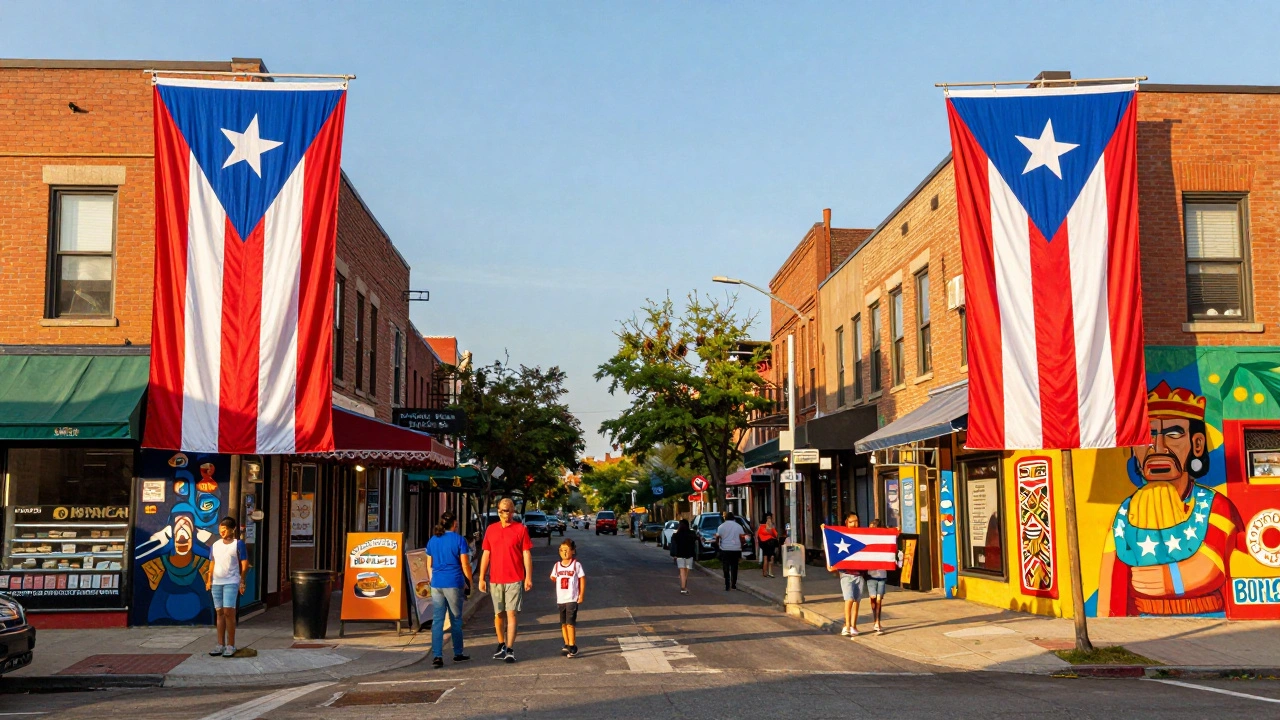
When you walk down Division Street in Humboldt Park, the air changes. The scent of sofrito and plantains drifts from open kitchen windows. Murals burst with bold colors-flags, faces, and phrases in Spanish and English. Music spills from car speakers: reggaeton, salsa, bomba. This isn’t just a neighborhood. It’s a living celebration of Puerto Rican identity in the heart of Chicago.
What Makes Humboldt Park a Cultural Anchor
Humboldt Park isn’t just a place on a map. It’s one of the largest Puerto Rican communities in the U.S., outside of Puerto Rico itself. By the 1970s, families from the island began settling here, drawn by jobs, affordable housing, and the chance to build something together. Today, over 70% of residents identify as Latino, and nearly half of them trace their roots to Puerto Rico.
The neighborhood’s history goes deeper than migration. In the 1960s, activists like the Young Lords organized rent strikes, fought for better sanitation, and demanded community control over schools and health services. Their legacy lives in the murals, the festivals, and the pride you see on people’s faces.
Paseo Boricua: The Heartbeat of the Community
At the center of it all is Paseo Boricua-the stretch of Division Street between Western and California Avenues. Two giant steel Puerto Rican flags, each 40 feet tall, stand like sentinels at either end. They’re not just decorations. They’re a declaration: this is Boricua land.
Walk down this strip and you’ll pass over 30 businesses owned by Puerto Ricans: bakeries with fresh mallorcas, botanicas with herbs and candles, record shops stacked with salsa vinyl, and cafés serving cafecito strong enough to wake the dead. The names tell the story-La Borinqueña Bakery, El Barrio, Centro de Apoyo Boricua.
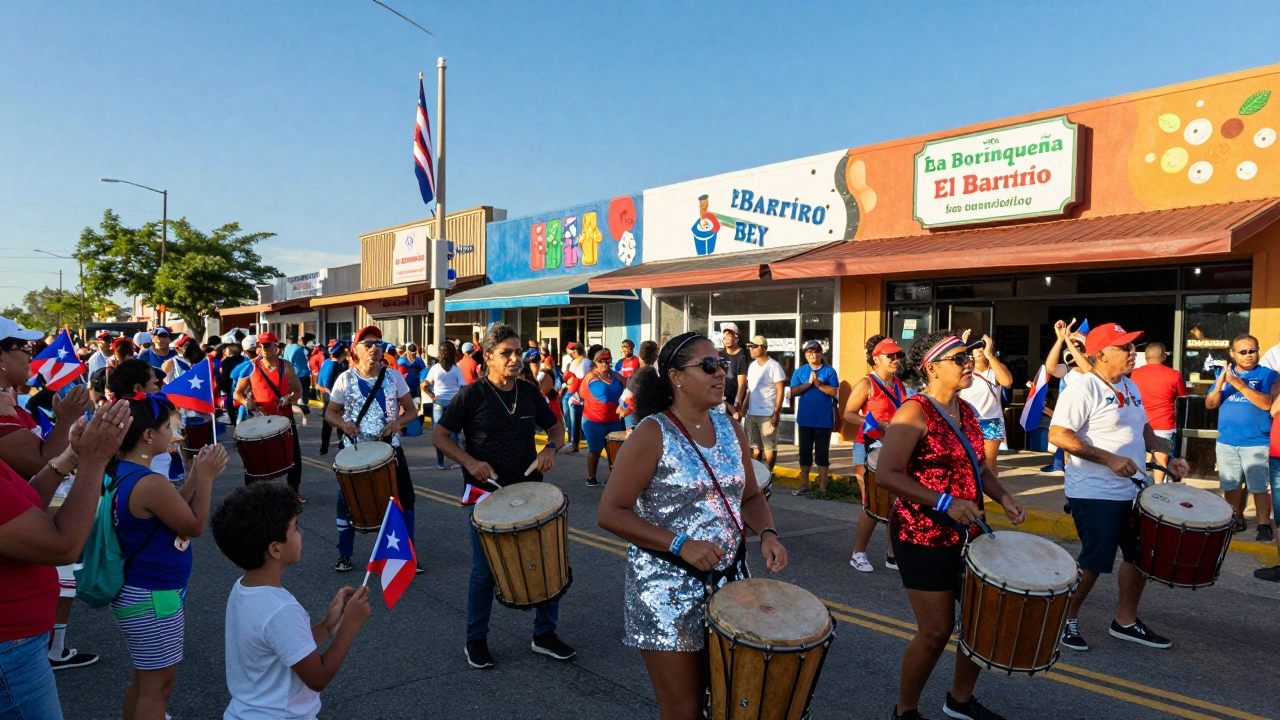
Every summer, the neighborhood explodes during the Puerto Rican People’s Parade. Over 100,000 people show up. Drummers pound out bomba rhythms. Dancers in sequins spin under the sun. Kids wave tiny flags. It’s not a tourist show-it’s a homecoming.
The Murals That Tell Stories
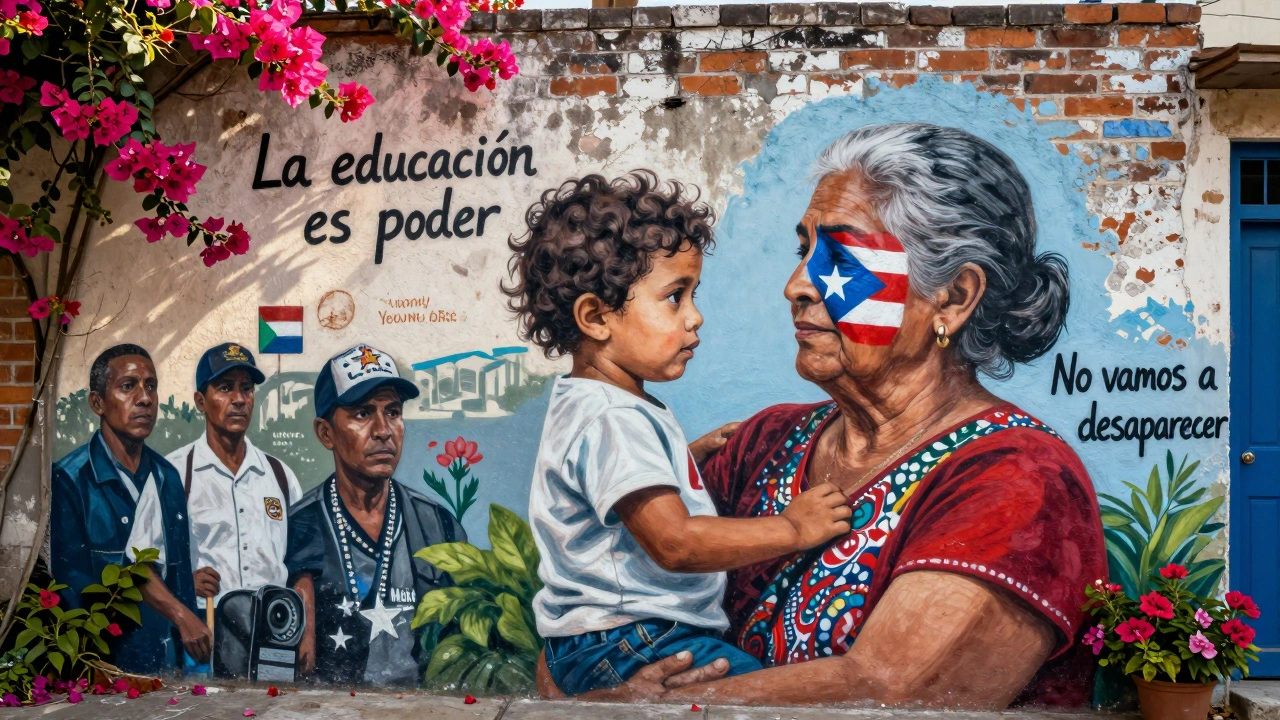
Look up. Everywhere you look, there’s art. Murals cover the sides of buildings like open books. One shows a woman holding a child, her face painted with the stars of the Puerto Rican flag. Another depicts a young boy reading a book under a tree, with the words: “La educación es poder.” Education is power.
These aren’t random graffiti. They’re community projects. Local artists work with elders, teachers, and youth groups to design each piece. Some honor fallen activists. Others celebrate Taíno ancestors. One mural, painted in 1993, still shows the face of Pedro Albizu Campos-a Puerto Rican independence leader. People still leave flowers at its base.
There’s a mural of a child holding a Puerto Rican flag with one hand and a Chicago Bulls jersey with the other. It says something simple: you can be both.
Food That Feels Like Home
If you haven’t tried a mofongo here, you haven’t really been to Humboldt Park. Made from fried green plantains mashed with garlic, pork cracklings, and a splash of broth, it’s served hot in a wooden bowl. At La Casita, they top it with shrimp in a garlic-lime sauce. It’s messy. It’s perfect.
For breakfast, go to El Sabor Boricua. They serve pasteles-savory pastries stuffed with beef or cheese-alongside cafecito and sweet, flaky guava pastries. The owner, Rosario, has been here since 1985. She remembers when the first Puerto Rican-owned restaurant opened on Division Street. She was 14. Now her granddaughter works the counter.
Don’t miss the arroz con gandules at El Cangrejo. The rice is cooked with pigeon peas, sofrito, and a hint of annatto. It’s not just food. It’s memory. Every bite carries the smell of kitchens in Ponce, Mayagüez, and San Juan.
Why This Place Matters Beyond Chicago
Humboldt Park isn’t just about preserving culture. It’s about shaping it. Local teens run a radio show called Radio Boricua, broadcasting in Spanish and Spanglish. A nonprofit called Centro de Apoyo helps new immigrants with legal aid, ESL classes, and job training. The community center hosts dance workshops for kids, free health screenings, and monthly poetry nights.
When the city tried to cut funding for youth programs in 2021, over 2,000 people showed up at City Hall. They came in drag, in dance shoes, in T-shirts that read “No vamos a desaparecer.” We won’t disappear.
That’s the spirit here. It’s not nostalgia. It’s resistance. It’s joy. It’s belonging.
How to Visit Humboldt Park With Respect
If you’re visiting, come with curiosity-not as a tourist looking for a photo op. Walk slowly. Talk to the shopkeepers. Ask about the murals. Try the food. Don’t rush. This isn’t a museum. It’s someone’s home.
- Visit during the day. The neighborhood is safest and most lively between 10 a.m. and 6 p.m.
- Support local businesses. Buy a coffee, a poster, a plantain chip. Don’t just take pictures.
- Respect the murals. Don’t touch them. Don’t climb on them. They’re not backdrops-they’re sacred.
- Attend the parade in August. It’s free, open to all, and unforgettable.
- Learn the history. Read about the Young Lords. Watch the documentary “The Young Lords: A People’s History.”
What’s Next for Humboldt Park
There’s pressure. Gentrification is creeping in. New condos are going up. Rents are rising. Some longtime families have had to leave.
But the community is fighting back. A new community land trust was formed in 2023 to buy and preserve affordable housing. Local artists are partnering with universities to document oral histories. A youth-led group is pushing for a Puerto Rican cultural center to be officially recognized by the city.
They know the stakes. This isn’t just about keeping buildings. It’s about keeping identity alive. And so far, they’re winning.
Is Humboldt Park safe to visit?
Yes, Humboldt Park is generally safe during daylight hours, especially along Division Street and the Paseo Boricua corridor. Like any urban neighborhood, it’s wise to stay aware of your surroundings, avoid walking alone late at night, and stick to busy areas. The community has strong neighborhood watch networks, and local businesses often keep an eye out for visitors. The biggest risk isn’t crime-it’s disrespect. Treat the area like a home, not a backdrop.
When is the best time to visit Humboldt Park?
The best time is during the Puerto Rican People’s Parade in mid-August. The whole neighborhood comes alive with music, food, and color. But if you want a quieter experience, visit in late spring or early fall. The weather is mild, the murals look vibrant, and you’ll have more room to talk with shop owners. Avoid winter months if you want to experience outdoor events-many businesses close early, and the murals can look dull under gray skies.
Can I take photos of the murals?
Yes, you can take photos-but don’t touch the murals, climb on walls, or block entrances to businesses while posing. Many murals are community-funded and deeply personal. Some feature real people-activists, elders, children-who are still alive. Always ask before photographing people, and never use images of the neighborhood for commercial purposes without permission. A simple thank-you goes a long way.
Are there English-speaking guides in Humboldt Park?
There aren’t official tour guides, but many locals are happy to share stories. The Centro de Apoyo Boricua offers free walking tours on weekends, led by community members who grew up here. They’ll point out hidden murals, explain the meaning behind the flags, and tell you where to find the best pasteles. Bring cash. Tip if you can. They’re not paid for this-they do it because they care.
What should I bring if I’m visiting Humboldt Park?
Comfortable walking shoes, a reusable water bottle, sunscreen, and cash. Many small businesses don’t take cards. A notebook or phone to jot down names of places you like. If you’re visiting in summer, bring a hat and light clothing. In winter, dress warmly-Division Street can get windy. And bring an open mind. This isn’t a theme park. It’s a living culture.