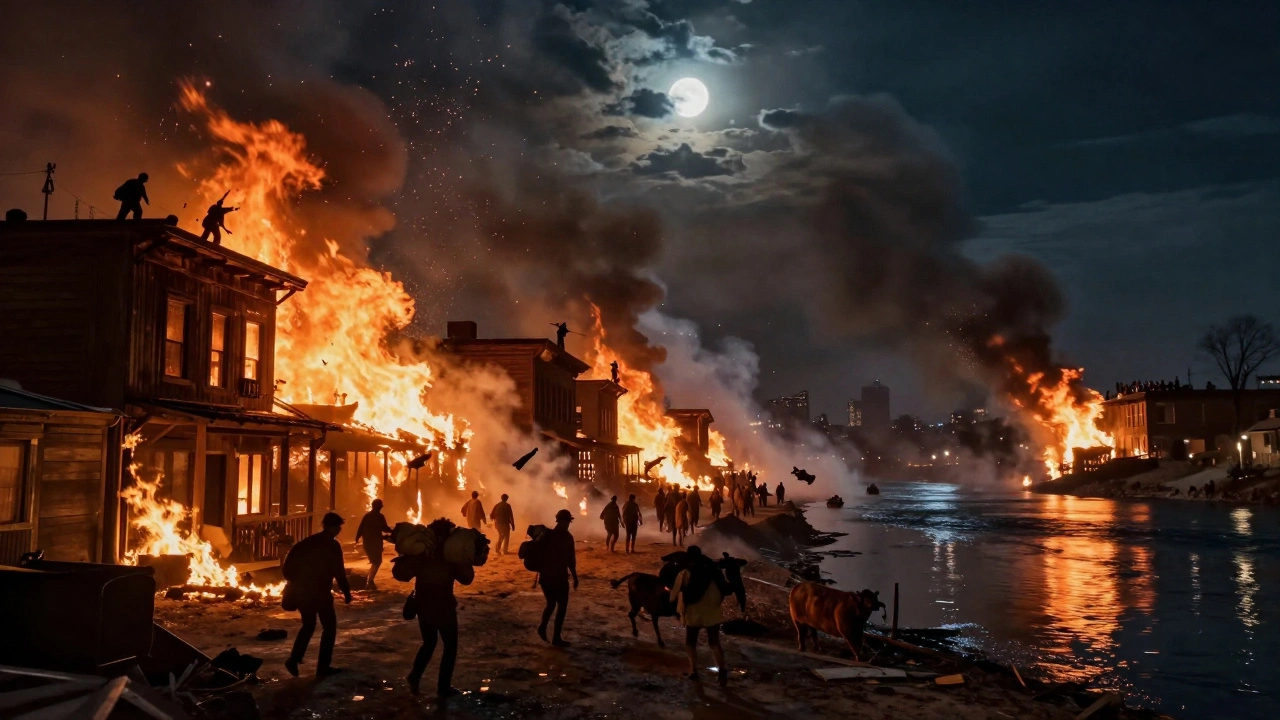
The Great Chicago Fire of 1871 didn’t just burn down buildings - it erased a city. By the time the flames were finally put out, more than 17,000 buildings were gone. Over 100,000 people were left homeless. Three hundred lives were lost. And yet, within a decade, Chicago didn’t just recover - it exploded into one of the most powerful cities in America.
How It Started
The fire began on the evening of October 8, 1871, in a small wooden barn behind a house on DeKoven Street. The owner, Catherine O’Leary, was blamed for letting her cow kick over a lantern - a story that stuck for decades. But no one ever proved it. Investigators later said the real cause was probably a spark from a chimney or even a group of boys playing with matches. The truth? We’ll never know for sure.
What made the fire so deadly wasn’t the spark - it was everything else. Chicago was built mostly of wood. Roofs, sidewalks, fences, even the gutters were made of timber. The city had gone months without rain. The ground was dry. The wind was blowing hard out of the southwest, pushing flames faster than anyone could run. Firefighters were overwhelmed. Their pumps ran out of water. The city’s only water tower had been drained trying to fight earlier fires.
By midnight, the fire had jumped the Chicago River. By dawn, it was swallowing whole neighborhoods. People fled with whatever they could carry - babies in baskets, family Bibles, livestock. Some jumped into the river to escape. Others climbed onto rooftops and waited for the fire to pass. A few stayed behind, hoping to save their homes. They didn’t survive.
The Aftermath
When the smoke cleared, nearly 20% of the city was gone. The fire destroyed the entire business district. The courthouse, the post office, the banks - all turned to ash. The city’s records? Burned. Tax rolls. Birth certificates. Deeds. Everything. Chicago didn’t just lose buildings - it lost its memory.
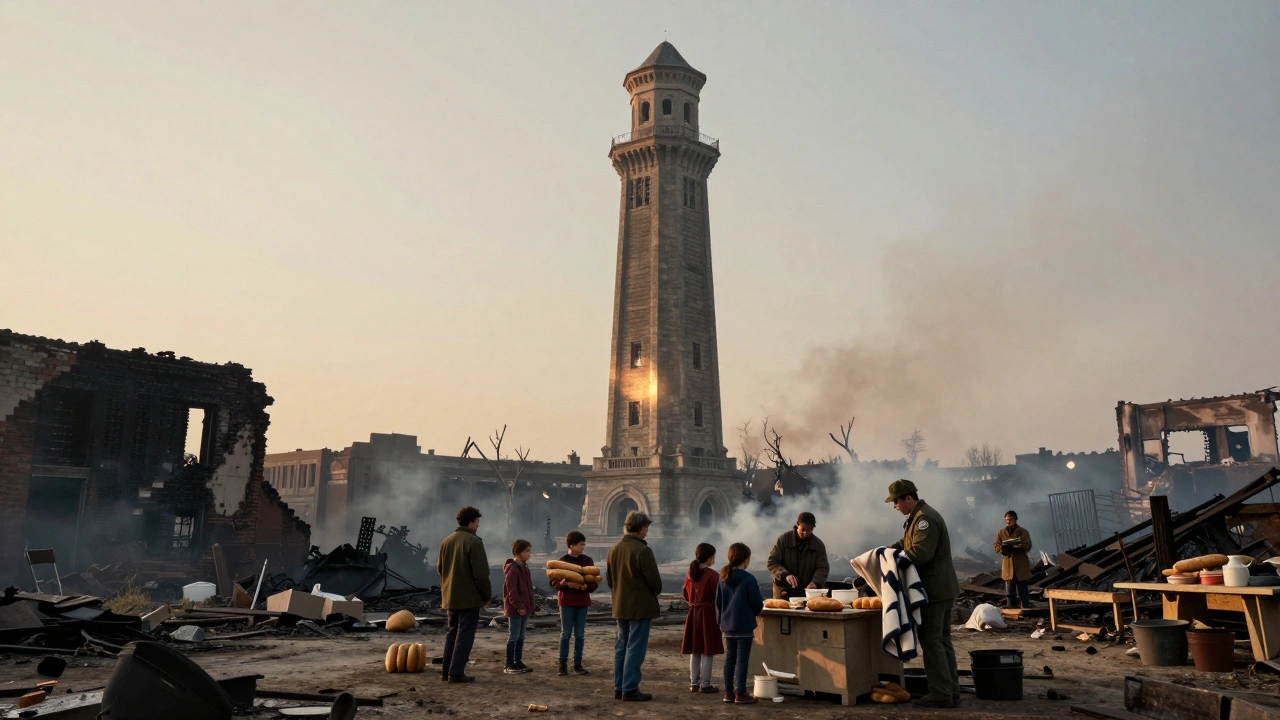
For weeks, people lived in tents. Soup kitchens fed thousands. The army set up camps. Churches opened their doors. The state sent aid. But the real story wasn’t the destruction - it was what came next.
Rebuilding Faster Than Anyone Thought Possible
Within days, city leaders made a bold decision: rebuild. Not slowly. Not carefully. But fast. And better.
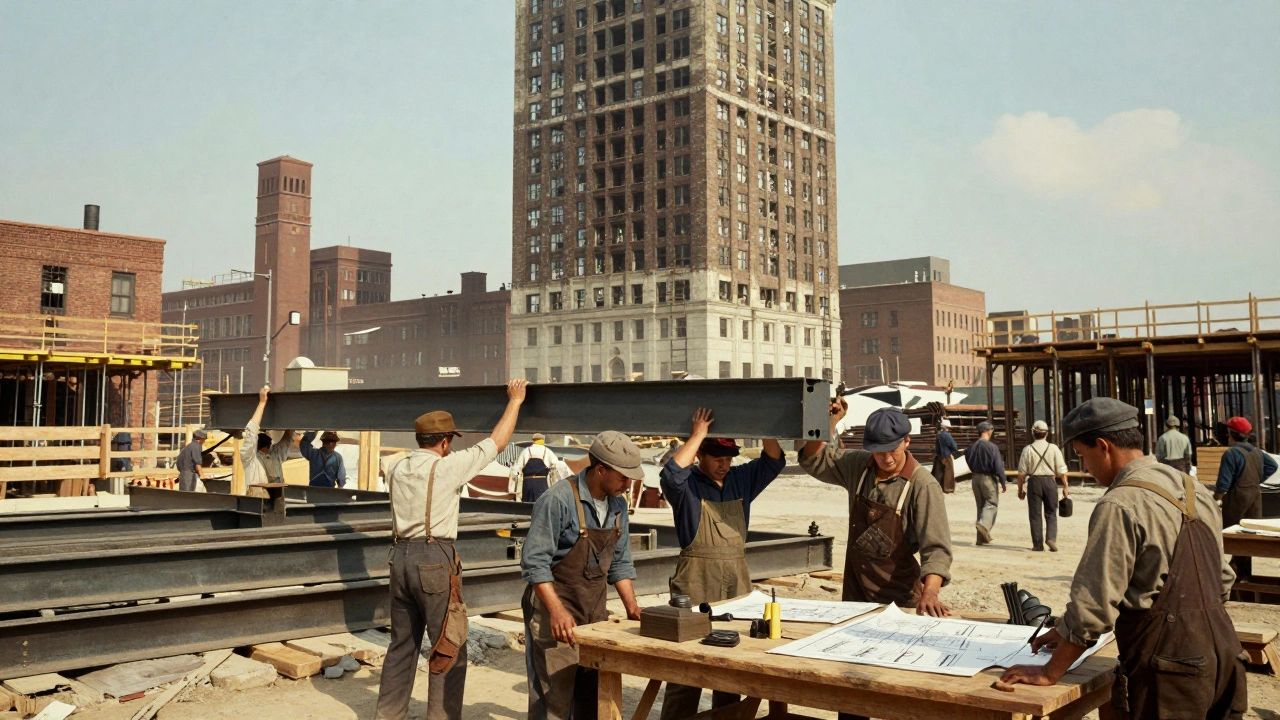
They passed new building codes. Wood was banned in the downtown area. Brick, stone, and iron became the new rules. Architects started designing buildings that could handle weight, wind, and fire. The first steel-frame skyscraper went up in 1885 - the Home Insurance Building. It had ten floors. People thought it was insane. Today, it’s called the birth of the modern skyscraper.
Chicago became a laboratory for urban design. Engineers developed new ways to drain the city. They raised the entire downtown by several feet to improve drainage and stop flooding. Roads were widened. Sewers were installed. The city’s grid was cleaned up. Streets were paved. Gaslights replaced oil lamps.
And the economy? It didn’t just bounce back - it boomed. The fire destroyed the old Chicago. What rose in its place was a modern, industrial powerhouse. Railroads poured in. Factories opened. Grain elevators rose along the lake. Chicago became the center of American commerce. By 1893, it hosted the World’s Columbian Exposition - a dazzling showcase of progress that drew 27 million visitors.
Who Made It Happen
It wasn’t just luck. It was people. Architects like Louis Sullivan and Daniel Burnham led the charge. They didn’t just design buildings - they designed a new way of living in a city. Sullivan’s motto? “Form follows function.” He built structures that were beautiful because they worked. Burnham planned entire neighborhoods, parks, and boulevards. He believed cities should serve people, not just commerce.
Businessmen poured money in. They knew Chicago could be more than a frontier town. They saw the fire as a chance to start over. Investors from New York, Boston, and Philadelphia rushed in. Banks reopened. Insurance companies paid out - even though many policies were lost in the fire. They paid anyway. Because they believed in Chicago.
Workers - immigrants from Ireland, Germany, Poland, and Sweden - came in droves. They laid bricks. Poured concrete. Hauled steel. They didn’t have much, but they had grit. They built the city with their hands.
The Myths That Still Linger
People still say the fire started because of a cow. It’s a nice story - simple, human, funny. But it’s false. Historians have spent decades digging through records. No evidence ever supported the cow theory. It was likely a newspaper reporter’s exaggeration that stuck because it was easier to believe than chaos.
Another myth? That the fire was the worst in U.S. history. It wasn’t. The Peshtigo Fire in Wisconsin burned the same night - and killed more than 1,200 people. But because it happened in a rural area, it got almost no attention. Chicago was the city. So Chicago’s fire became legendary.
And yet - the fire did change America. It showed what happens when a city refuses to stay down.
What Survived
Not everything burned. The Chicago Water Tower, built in 1869, stood tall. It was made of limestone and survived because it was far enough from the main fire. Today, it’s one of the city’s most beloved landmarks. People still take photos in front of it. It’s a symbol - not just of survival, but of stubbornness.
Some churches held out. The Old St. Mary’s Church on Lake Street was charred but still standing. The congregation held Mass the next Sunday. No one canceled services. They lit candles. They sang. They refused to let the fire take their spirit.
And then there’s the city’s attitude. Chicagoans didn’t wait for permission to rebuild. They didn’t wait for a plan. They just started. A carpenter put up a board. A baker opened his oven. A lawyer set up a desk on a street corner. They didn’t ask, “Is this safe?” They asked, “What’s next?”
Why It Still Matters Today
The Great Chicago Fire isn’t just history. It’s a lesson. Cities don’t die when they burn. They transform. The fire forced Chicago to rethink everything - how buildings were made, how water was managed, how people lived together. That mindset didn’t disappear. It became part of the city’s DNA.
Look at Chicago today. It’s still rebuilding. New towers rise. Old neighborhoods are being reshaped. The city doesn’t fear change - it leans into it. That’s the legacy of 1871. Not the destruction. Not the loss. But the refusal to quit.
Did the Great Chicago Fire really start because of a cow?
No, there’s no proof the cow started the fire. The story came from a newspaper report that blamed Catherine O’Leary’s cow for knocking over a lantern. Historians have since found no evidence to support this. The fire likely began from a spark in the barn’s chimney or from children playing with matches. The cow story stuck because it was simple and memorable, but it’s a myth.
How many people died in the Great Chicago Fire?
About 300 people died. But exact numbers are hard to pin down because so many records were destroyed. Many victims were never identified. Others were buried in mass graves. The official death toll is an estimate based on reports from hospitals, coroners, and survivors.
What was the first building rebuilt after the fire?
The first permanent structure rebuilt was the Chicago Water Tower, completed in 1869, which survived the fire. After the fire, businesses rushed to rebuild. The first new commercial building to rise was a small brick warehouse on Lake Street, completed in early 1872. Within months, dozens of new buildings were under construction.
Why didn’t the fire spread to the whole city?
The fire stopped mostly because it ran out of fuel. It burned through the dense wooden downtown, then hit areas with fewer buildings, open fields, and the lake. Rain also fell on October 10, helping to finally put out the last embers. Wind patterns shifted, and firefighters managed to create firebreaks by dynamiting buildings ahead of the flames - a risky but effective tactic.
How did Chicago pay for the rebuilding?
Chicago raised money through bonds, insurance payouts, and private investment. Even though many records were lost, insurance companies paid claims based on witness testimony and personal accounts. Wealthy investors from the East Coast poured in, seeing opportunity in the chaos. The city also borrowed heavily, trusting that its future economy would repay the debt. It did - and then some.