Chicago has never been just a city of steel and skyscrapers. Beneath its modern skyline, there’s a deep, messy, vibrant past-stored in dusty boxes, digitized microfilms, and handwritten letters tucked away in quiet rooms across the city. If you want to understand how Chicago became Chicago, you don’t need to walk down Michigan Avenue. You need to open a file cabinet.
Who Keeps Chicago’s Past Alive?
There isn’t one single archive that holds all of Chicago’s history. Instead, there’s a network of historical societies, each with its own focus, its own quirks, and its own treasures. The Chicago Historical Society is a nonprofit organization founded in 1856, now known as the Chicago History Museum, that collects, preserves, and interprets the city’s past through artifacts, photographs, and oral histories. But it’s not alone. The Newberry Library holds over 1.5 million rare books and manuscripts, including the original 1833 plat map of Chicago. The Chicago Public Library’s Harold Washington Library Center has a dedicated Special Collections division with city directories dating back to 1837. And then there are smaller players like the Swedish American Museum and the Illinois Holocaust Museum & Education Center, each preserving slices of the city’s multicultural story.
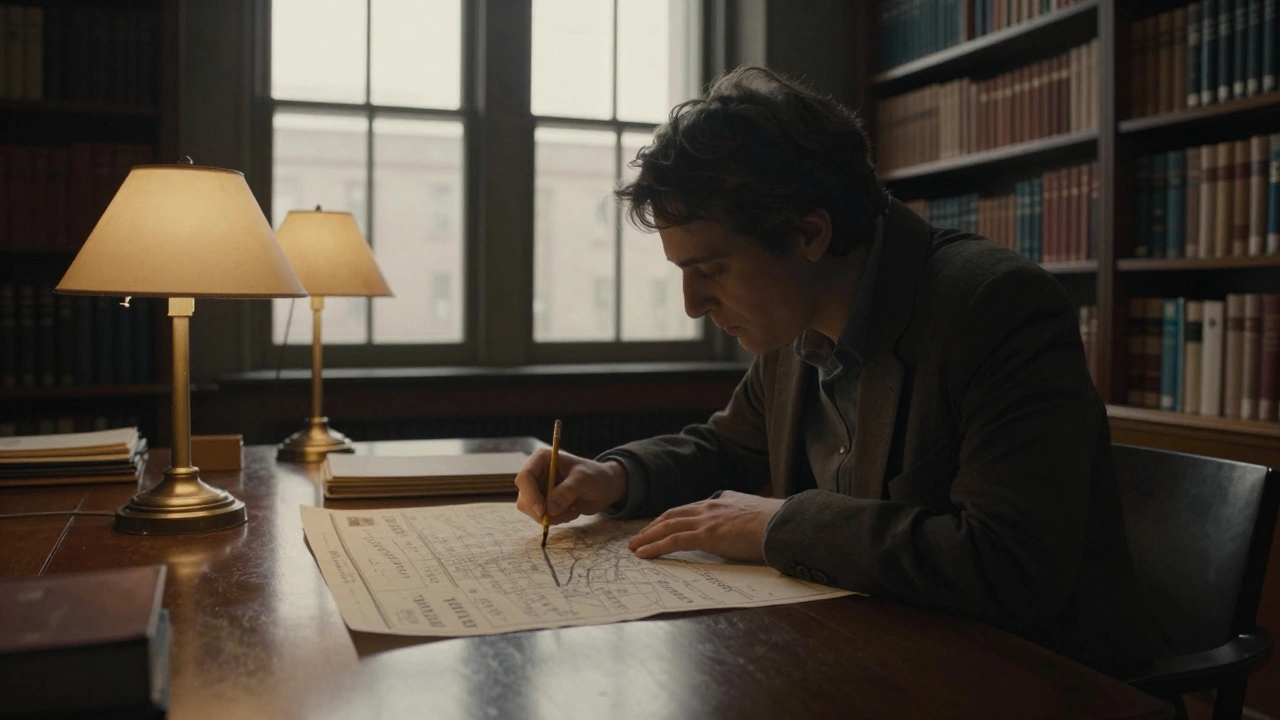
These aren’t just museums with glass cases. They’re working research centers. People come here to trace family roots, write dissertations, verify property lines, or even settle legal disputes. A lawyer once used a 1910 fire insurance map from the Chicago History Museum to prove a building’s original footprint in a zoning case. A student researching immigrant labor movements found a box of union meeting minutes at the Newberry that had never been cataloged.
What’s Actually in the Archives?
The archives don’t just hold famous documents. They hold the everyday. You’ll find:
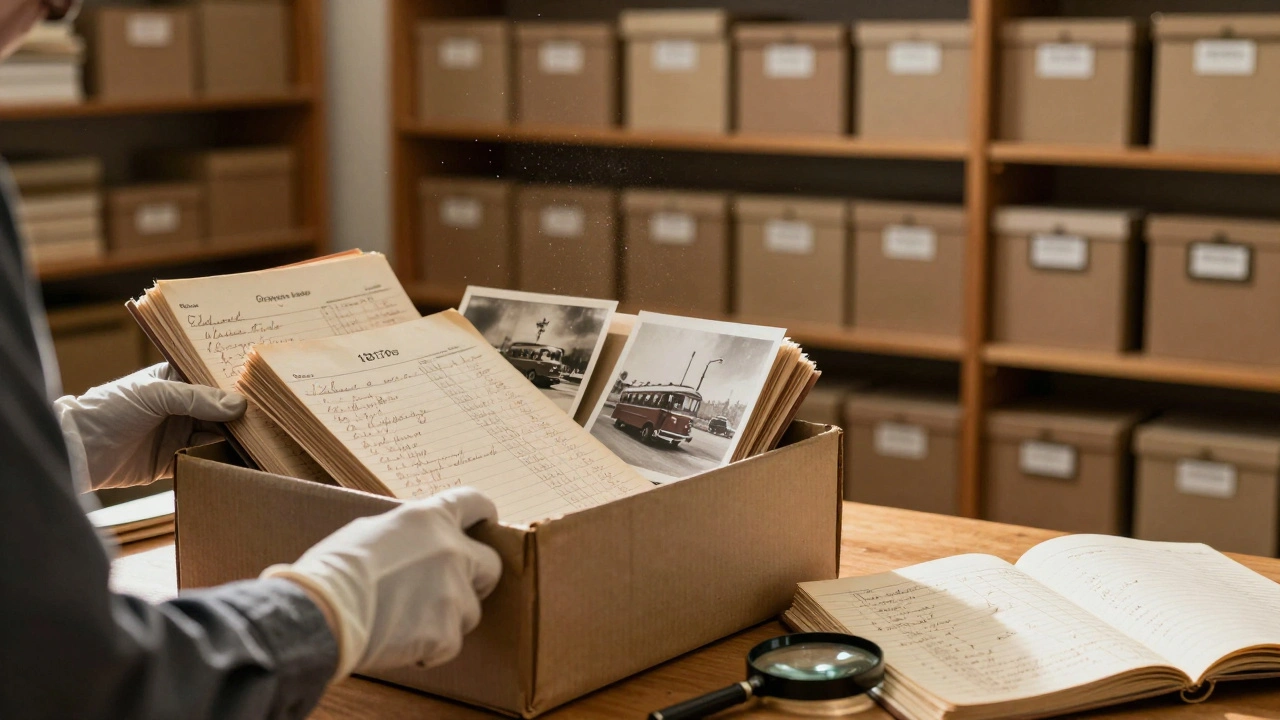
- Handwritten ledgers from the 1870s showing what groceries a Polish immigrant bought each week
- Photographs of streetcars from the 1900s, with dates scribbled on the back in pencil
- Letters from soldiers in World War I, mailed from Chicago’s train depots
- Blueprints for demolished buildings, including the original Chicago Stock Exchange
- Audio recordings of 1950s jazz clubs in Bronzeville
- Maps of neighborhoods that no longer exist-like the original Little Italy before it was swallowed by the University of Illinois at Chicago
Some collections are digitized. Others still live in acid-free boxes, stacked floor-to-ceiling in climate-controlled rooms. The Chicago History Museum Archives alone holds over 20 million items. That’s not a typo. Twenty million. And only about 15% of them are online.
Preservation isn’t just about saving paper. It’s about stopping decay. Paper turns brittle. Film fades. Magnetic tape loses its signal. Archivists fight this every day. They use humidity monitors, UV-filtered lighting, and inert storage materials. Some documents are being copied onto polyester film. Others are being scanned at 600 dpi so future researchers can zoom in on a signature or a street number without touching the original.
How Do Researchers Use These Collections?
You don’t need a PhD to walk in. Most archives are open to the public. But you need to know how to ask.
Start with a clear question. Don’t say, “I want to know about Chicago in the 1920s.” Say, “I’m looking for records of people who lived in the 4400 block of South State Street between 1922 and 1925.” That’s the kind of specificity that gets results.
Many collections require an appointment. Some materials can’t be handled directly-archivists retrieve them for you. At the Newberry, you sign in, leave your bag in a locker, and use a pencil (no pens allowed). At the Chicago History Museum, you can request digitized copies of photos for $10 each. At the Harold Washington Library, you can access digitized city directories for free online.
One researcher spent three years tracing her great-grandfather’s path from Ireland to Chicago. She started with a census record, then used a 1903 city directory to find his address, then found a rental receipt in a landlord’s ledger at the Chicago History Museum. That receipt led her to a newspaper ad where he’d placed a job listing. She built a story from fragments.
The Hidden Stories Nobody Talks About
Most people think of Chicago history as the Great Fire, Al Capone, or the World’s Fair. But the archives hold quieter, stranger stories.
There’s a folder at the Newberry with letters from women who worked as “street cleaners” in 1890. They weren’t janitors. They were paid to remove horse manure from sidewalks. One woman wrote, “I earn more than my husband, and I’m not ashamed.”
At the Chicago History Museum, there’s a collection of postcards sent by Black families during the Great Migration. They show houses in Bronzeville, churches on 35th Street, and handwritten notes: “We made it. Come join us.”
And then there’s the Chicago Urban League Collection, which includes payroll records from the 1940s showing wages paid to Black workers in white-owned factories. Those records helped prove wage discrimination in a 1960s lawsuit.
These aren’t just relics. They’re evidence. Evidence of who lived here, who was left out, who fought, and who stayed.
How Preservation Is Changing
Archivists aren’t just sitting in rooms with gloves on. They’re out in the community.
The Chicago History Museum now runs oral history projects in neighborhoods like Englewood and Pilsen. They record elders telling stories about block clubs, grocery stores, and schools that closed decades ago. These recordings are added to the archive-not as “interviews,” but as primary sources.
At the University of Illinois at Chicago, students are digitizing 1970s neighborhood newsletters from the South Side. These weren’t newspapers. They were stapled sheets passed out at corner stores. But they had ads, event notices, and letters from tenants fighting landlords. One newsletter from 1976 mentioned a rent strike that lasted 11 months. No one had written about it before.
Technology is helping. AI tools can now transcribe handwritten letters faster than humans. But they still make mistakes-especially with old handwriting or dialects. So archivists still sit with magnifying glasses, comparing ink stains and letter shapes.
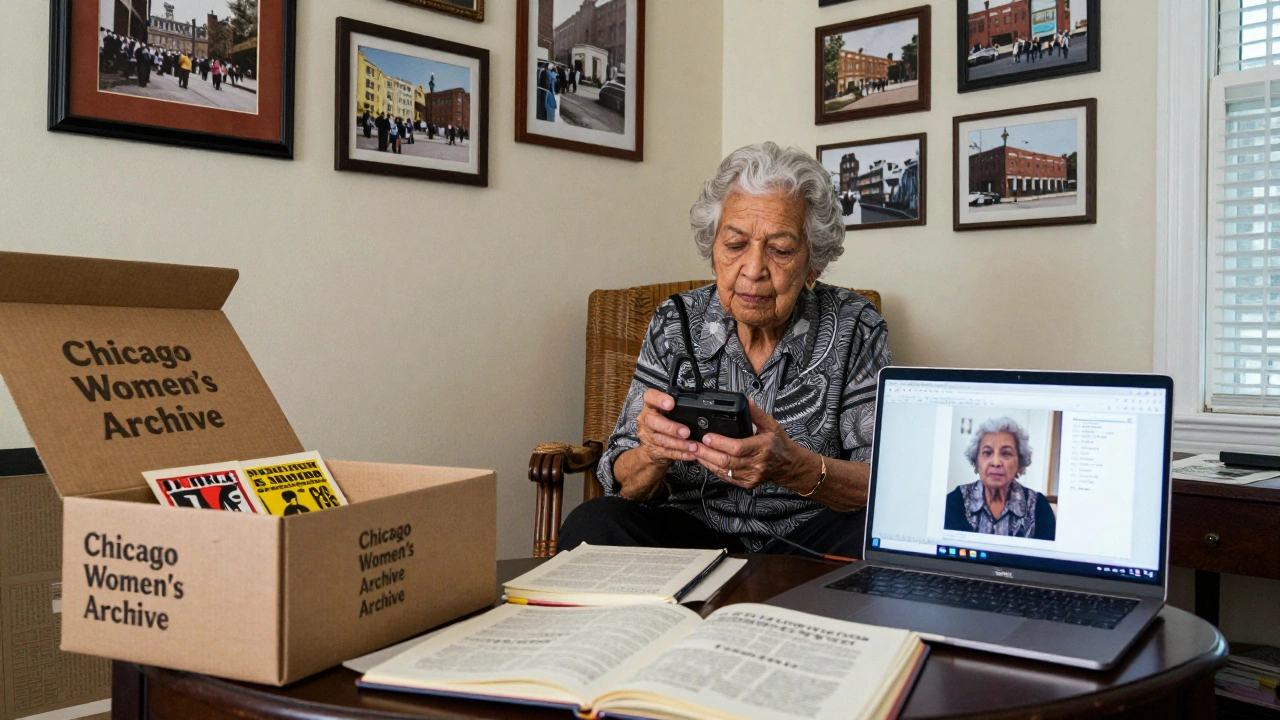
The biggest shift? Archives are no longer just about the past. They’re about accountability. Who gets remembered? Who gets erased? The Chicago Women’s Archive was founded in 2018 because women’s voices were missing from every other collection. Now it holds over 8,000 items-from protest flyers to diaries of nurses who worked during the 1918 flu pandemic.
How You Can Help
You don’t have to be a historian to help preserve Chicago’s past.
- If you have old photos, letters, or diaries from Chicago, contact a local archive. Many will scan them for free.
- Volunteer to transcribe documents. The Newberry and Chicago History Museum both have online transcription projects.
- Donate to preservation funds. A single box of acid-free folders costs $15. A climate control system costs $50,000. Every dollar matters.
- Ask your local library if they have a local history collection. If not, push for one.
History doesn’t vanish because it’s forgotten. It vanishes because no one bothered to save it.
Can anyone visit Chicago’s historical archives, or do you need special access?
Yes, anyone can visit. Most archives are open to the public, though some require appointments or have reading room rules. You’ll need to bring a photo ID, leave bags and pens in lockers, and use pencils. Some materials are restricted due to privacy or fragility, but archivists will help you find alternatives. No membership or academic affiliation is required.
Are Chicago’s historical archives digitized?
Some are, but not most. The Chicago Public Library’s digital collections include city directories, census records, and maps. The Newberry Library has over 200,000 digitized items online. The Chicago History Museum has about 15% of its 20 million items digitized. The rest are physical-stored in climate-controlled rooms. Digitization is ongoing, but it’s slow and expensive.
What’s the most surprising thing found in Chicago archives?
One of the most unexpected finds was a 1919 ledger from a Black-owned funeral home in Englewood that listed every burial for a year-including names, causes of death, and whether the family paid in cash or bartered goods. It revealed how the community supported each other during the Red Summer riots. No one had known it existed until a researcher found it in a forgotten box.
How do I know which archive holds the records I need?
Start by identifying the type of record. City directories? Try the Harold Washington Library. Property deeds? The Chicago History Museum. Personal letters or diaries? The Newberry Library. Ethnic or community records? Check the Swedish American Museum, the Illinois Labor History Society, or the Chicago Women’s Archive. Most archives have online finding aids or archivists who can help you search.
Can I request copies of documents?
Yes. Most archives offer photocopies or digital scans for a fee. The Chicago History Museum charges $10 per photo scan. The Newberry charges $15 per page for high-resolution scans. Some materials are too fragile to copy. In those cases, archivists may let you view them under supervision or provide a transcription.
What’s Next for Chicago’s History?
The future of Chicago’s archives isn’t just about storage. It’s about access. More people are asking: “Where’s my story?”
Archivists are working with community groups to collect oral histories from refugees, gig workers, and LGBTQ+ elders. They’re partnering with schools to turn archives into classrooms. One high school in Humboldt Park now has a course where students digitize their grandparents’ photos and write essays based on them.
And the pressure is growing. Climate change threatens basements where old records are stored. Budget cuts mean fewer staff. But the demand? It’s rising. Every year, more people come looking for proof-proof that their family belonged here, that their neighborhood mattered, that their voice wasn’t erased.
Chicago’s history isn’t in the skyline. It’s in the margins. In the footnotes. In the boxes no one thought to open. And if no one opens them now, they’ll be gone before anyone remembers to look.