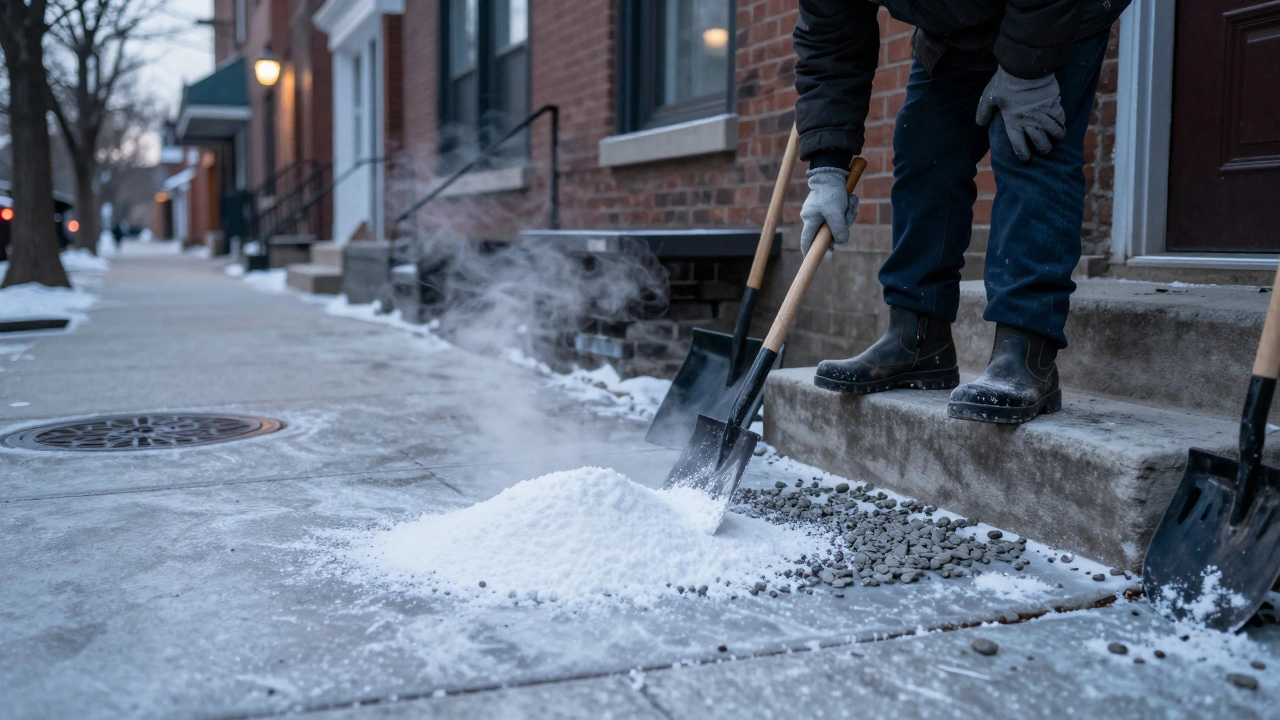
Chicago winters don’t just bring snow-they turn sidewalks into skating rinks. By mid-February, ice builds up along every curb, driveway, and crosswalk. You’ve probably slipped on it. Maybe you’ve seen someone else go down. And if you’ve ever tried to walk to the bus stop in boots that don’t grip, you know: salt isn’t the whole answer.
Why Salt Alone Fails in Chicago
Salt works by lowering the freezing point of water. But it needs temperatures above 15°F to do anything meaningful. When Chicago hits 0°F or lower-common in January and February-salt turns into dust. It doesn’t melt ice. It just sits there, making slush worse and tracking into your shoes.
Chicago Public Works spreads over 120,000 tons of salt each winter. That’s enough to cover every sidewalk, street, and alley in the city. But here’s the catch: salt doesn’t prevent ice from forming. It only helps melt it after it’s already there. And if you’re waiting for the city to clear your block, you’re out of luck. Most residential sidewalks are the homeowner’s responsibility under Chicago law.
What Works Better Than Salt
There are smarter, safer options than just tossing rock salt everywhere. Here’s what actually helps in extreme cold:
- Calcium Magnesium Acetate (CMA) - Works down to -20°F. Less damaging to concrete and plants than salt. Costs more, but lasts longer and doesn’t corrode metal.
- Potassium Acetate - Used on airport runways. Effective at -50°F. Often used in commercial settings, but available for homeowners in granular form.
- Beet Juice Blends - Mixed with salt, it lowers the freezing point and sticks to surfaces. Chicago has tested it on major roads. It’s sticky, smells like sugar beets, and reduces salt use by up to 70%.
- Urea - A fertilizer-based de-icer. Safer for pets and grass, but doesn’t work below 20°F. Good for light snow, not thick ice.
These alternatives cost more upfront, but they’re gentler on your driveway, your shoes, and your pet’s paws. If you’ve got kids or dogs walking outside, switching even half your salt use to one of these can make a big difference.
Traction Is Just as Important as Melting
Even if you melt the ice, you still need grip. That’s where traction products come in. They don’t melt anything. They just give your shoes something to hold onto.
- Sand - Cheap, widely available, and non-toxic. Spreads easily. But it washes away with rain or melting snow. Best for immediate steps.
- Crushed Stone or Gravel - Lasts longer than sand. Great for high-traffic areas like driveways and front steps. Doesn’t track indoors like sand.
- Wood Ash - Free if you have a fireplace. Contains potassium, which helps melt ice slightly. Gives traction and darkens ice so you can see it better.
- kitty litter - Not for cats. Just the clay-based kind. Gives instant grip. Doesn’t melt ice, but won’t harm concrete or plants.
Pro tip: Combine traction with de-icer. Put down a thin layer of sand or gravel first, then sprinkle a small amount of CMA or beet-blend over it. The traction material holds the de-icer in place and gives immediate safety while the chemical does its job.

How to Apply These Products Right
Most people make the same mistake: they dump too much. You don’t need a mountain of sand or a bucket of salt. Here’s what works:
- Clear snow first. Use a shovel before ice forms. Snow packed down turns to ice faster.
- Apply de-icer sparingly. A handful per square yard is enough. Too much just runs off or turns into slush.
- Use traction material where people walk. Focus on steps, ramps, and narrow paths. Don’t cover your whole driveway.
- Reapply after heavy snow or freezing rain. Ice doesn’t stay gone for long.
One homeowner on the North Side told me she uses a small plastic scoop-like the kind you use for pet food-to measure out her de-icer. She says it cuts her winter costs in half and keeps her walkway safer.
What to Avoid
Some “solutions” you see online are dangerous or ineffective:
- Hot water - Pouring boiling water on ice cracks concrete and refreezes into thicker ice. It’s a temporary fix that makes things worse.
- Clay kitty litter - Only use non-clumping. Clumping litter turns into a slick paste when wet.
- Chemical de-icers labeled “pet-safe” - Many still contain ethylene glycol. Read labels. Look for “propylene glycol” instead.
- Ice melt with added dyes - Blue or pink pellets are just for show. They don’t work better. You’re paying for color.
Protecting Your Property
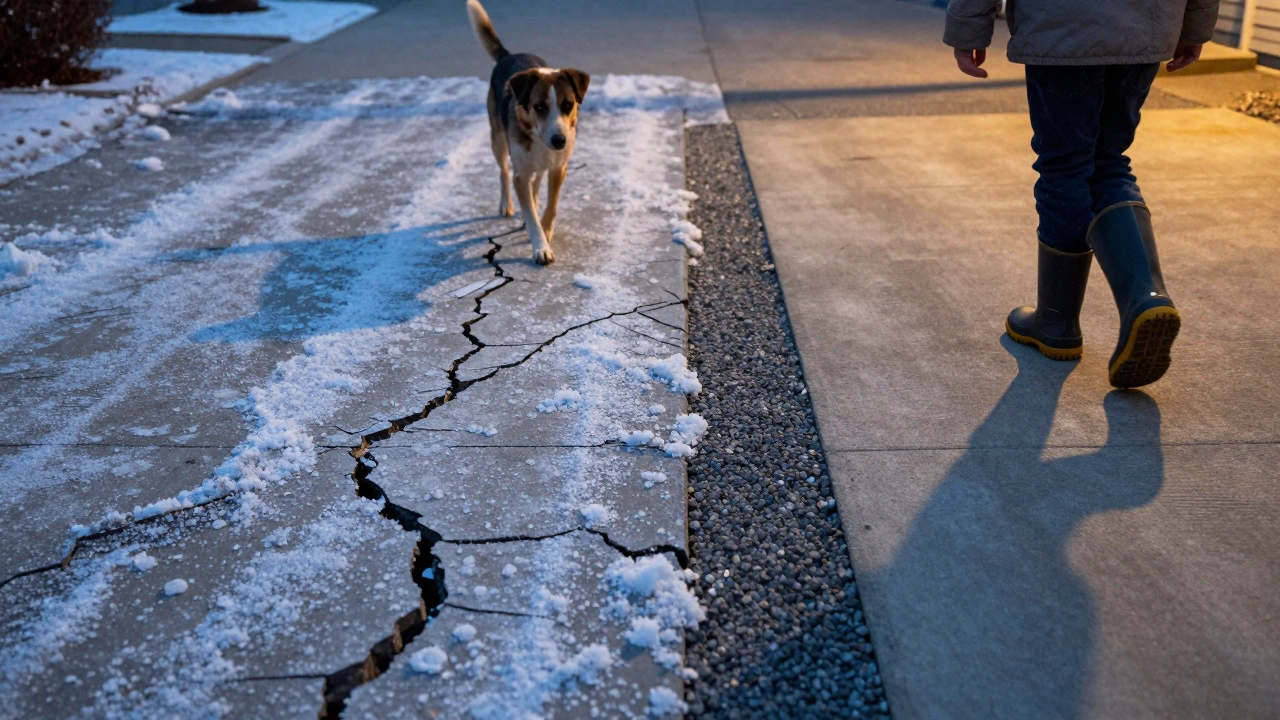
Chicago’s freeze-thaw cycles are brutal on concrete. Salt accelerates cracking. If you’ve got a new driveway or stamped concrete, you need to protect it.
Seal concrete every 2-3 years with a penetrating sealer. It stops salt and water from soaking in. If you don’t seal it, you’ll be replacing sections by 2028.
Also, clear snow before it turns to ice. Shovel early. Even 2 inches of snow, if left overnight, can freeze into a sheet by morning. That’s when you start slipping.
What the City Doesn’t Tell You
Chicago’s 311 system lets you report uncleared sidewalks. But here’s the reality: the city prioritizes main roads, transit routes, and hospitals. Your residential block? You’re on your own. There’s no legal requirement for landlords to clear sidewalks unless they’re in a designated zone-most aren’t.
That means if your neighbor doesn’t shovel, you’re walking on their ice. If your kid slips and breaks a wrist, you can’t sue the city. But you can talk to your block club. Some neighborhoods have organized snow-clearing teams. One on the Southwest Side rotates responsibilities weekly. Everyone chips in $10 a season for sand and de-icer. It’s cheaper than ER bills.
Final Tips for Walking Safely
Even with perfect ice control, you still need to walk smart:
- Wear boots with deep treads-rubber soles with zigzag patterns grip better than smooth soles.
- Take small steps. Don’t stride out. Keep your weight centered.
- Use handrails when available. Even a metal pole gives you balance.
- Carry a small bag of sand or kitty litter in your coat pocket. If you see a patch of black ice, toss a handful down.
- Watch for ice under snow. It’s invisible. If you see a patch that looks glossy, assume it’s ice.
Winter in Chicago isn’t going away. But you don’t have to live in fear of your own sidewalk. It’s not about using more salt. It’s about using smarter tools, applying them right, and watching out for each other.
Is rock salt harmful to pets in Chicago winters?
Yes. Rock salt can burn your dog’s paws and is toxic if licked off. Signs include excessive licking, redness between the toes, or vomiting. Rinse your pet’s paws after walks. Use pet-safe de-icers like calcium magnesium acetate or potassium acetate. Keep them away from salt piles.
Can I use wood ash from my fireplace on sidewalks?
Yes, and it’s a smart, free option. Wood ash gives traction and slightly lowers the freezing point of ice. It’s non-toxic and won’t damage plants or concrete. Just avoid using it on new concrete-it can stain. Spread it thin, like you would sand.
What’s the best time to clear snow before it turns to ice?
Clear snow as soon as it stops falling. Waiting even a few hours lets it compact and freeze. If you shovel before the sun sets, you avoid the worst ice. Morning is better than night-temperatures drop after dark.
Do de-icing products damage plants and lawns?
Salt does. It leaches into soil and kills grass and shrubs over time. Alternatives like CMA, potassium acetate, and beet juice blends are far less harmful. If you have flower beds near your walkway, use these instead of rock salt. Rinse soil in spring with a hose to flush out leftover salts.
Why doesn’t Chicago use more eco-friendly de-icers?
Cost and scale. The city spends $15 million annually on salt. Alternatives like beet blends cost 3-5 times more per ton. While some neighborhoods test them, city-wide adoption isn’t feasible yet. But homeowners can make the switch-and that’s where real change starts.