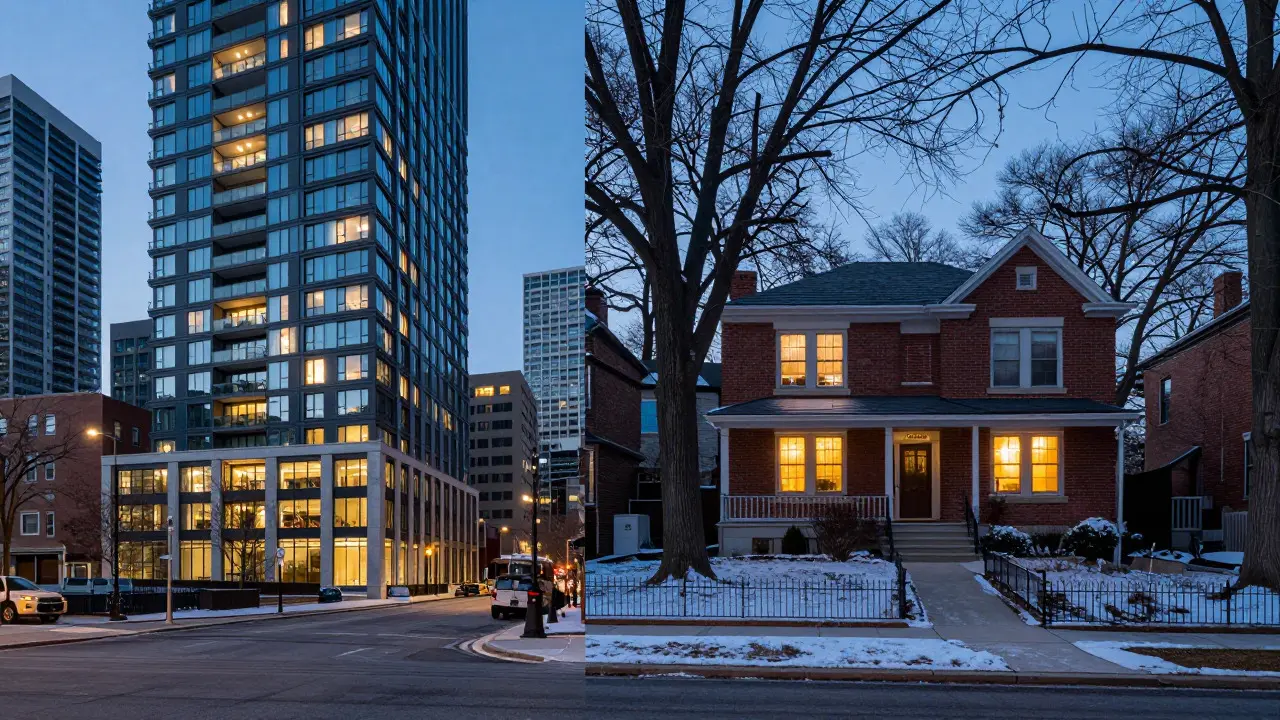
Buying a home in Chicago is a major financial decision, but the debate between a condominium and a single-family home often stalls buyers at the finish line. One offers low maintenance and urban convenience; the other provides privacy and land equity. The right choice depends less on personal preference and more on your long-term financial strategy, lifestyle needs, and tolerance for responsibility.
This guide breaks down the hard numbers and practical realities of owning each property type in the Windy City. We will look at upfront costs, ongoing expenses, appreciation trends, and the specific neighborhoods where one option might outperform the other. By the end, you will have a clear framework to decide which asset fits your life in 2026.
The Financial Breakdown: Upfront Costs and Monthly Payments
When comparing these two property types, the sticker price is only part of the story. A $450,000 condo in Lincoln Park may feel cheaper than a $600,000 detached home in Evanston, but the monthly carrying costs tell a different tale. Condos typically require a lower down payment because their average sale price is about 30% lower than comparable single-family homes in similar zip codes. However, this savings is often offset by higher HOA fees.
In Chicago, average monthly HOA dues for high-rise condos range from $400 to $800 per month. These fees cover exterior maintenance, elevator service, building insurance, and common area utilities. In contrast, a single-family home owner pays no HOA fee unless they live in a planned community, but they assume full responsibility for roof repairs, landscaping, and snow removal. For a typical three-bedroom home, annual maintenance costs can easily reach 1-2% of the home's value, or roughly $6,000 to $12,000 per year. That translates to $500 to $1,000 per month in potential cash flow shocks that condo owners avoid.
Mortgage rates also play a role. As of mid-2026, fixed-rate mortgages for primary residences hover around 6.2% to 6.8%. Because condos are often priced lower, the principal and interest portion of the loan is smaller. But when you add the HOA fee to the mortgage payment, the total monthly housing cost for a condo can sometimes exceed that of a similarly sized house in a suburb with lower taxes. Always calculate the total monthly outlay, not just the mortgage note.
Lifestyle and Maintenance: Who Does the Work?
The biggest non-financial difference is control versus convenience. If you hate fixing leaky faucets, mowing lawns, or shoveling snow, a condo is the logical choice. The Homeowners Association (HOA) manages the exterior. You paint your walls, fix your appliances, and enjoy the rest. This is particularly appealing for young professionals, empty nesters, or anyone who travels frequently for work.
Single-family homes offer the opposite trade-off. You get a yard, a garage, and the freedom to renovate without board approval. But you also become the general contractor of your own life. In Chicago, winter maintenance alone can be a significant burden. Snow removal for a driveway can cost $150 to $300 per storm if hired out, or take hours of your time if done manually. Roof replacements, which happen every 20-25 years, cost $10,000 to $20,000 for an average suburban home. Condo owners rarely see these line items because the reserve fund covers them, provided the association is well-managed.
Consider your timeline. If you plan to stay in the property for five years or less, the transaction costs of buying and selling a house are higher due to agent commissions and closing fees. Condos sell faster in urban cores like the Loop or River North, potentially reducing your days on market. Houses in suburbs like Oak Park or Skokie may sit longer, requiring patience and pricing strategy.
Neighborhood Dynamics and Appreciation Trends
Location dictates value. In central Chicago neighborhoods such as Lincoln Park, Wicker Park, and Logan Square, condos dominate the inventory. These areas have limited land availability, pushing new construction into vertical structures. Condo prices in these districts have shown steady appreciation, averaging 4-5% annually over the last decade, driven by walkability scores and proximity to transit.
Single-family homes thrive in the outer ring suburbs and older residential pockets like Hyde Park or Lakeview. Here, land value is a key component of equity. When interest rates drop, houses tend to appreciate faster than condos because the pool of qualified buyers expands. Conversely, in downtown areas, condo values can be volatile if new high-rises flood the market with supply. Always check local absorption rates before committing to a specific building or street.

Hidden Costs and Risks to Watch
Both property types carry unique risks. For condos, the biggest threat is a special assessment. If the building’s reserve fund is underfunded, the HOA may levy a one-time charge to residents to pay for major repairs, like a new water pump system or facade restoration. Assessments can range from $5,000 to $50,000 per unit. Before buying, review the association’s financial statements and reserve study. A healthy reserve fund should cover at least 70% of projected major repairs over the next 10 years.
For single-family homes, the risk is deferred maintenance. Older Chicago homes, particularly those built before 1950, often have lead pipes, knob-and-tube wiring, or outdated HVAC systems. These issues do not show up in a standard inspection and can cost tens of thousands to remediate. Additionally, property taxes in Cook County are complex and can increase significantly after a purchase if the assessed value jumps. Condo owners face similar tax bills, but the base value is often lower, resulting in slightly lower absolute tax payments despite the same rate structure.
Comparison Table: Condo vs. Single-Family Home in Chicago
| Feature | Condominium | Single-Family Home |
|---|---|---|
| Average Price Range | $350,000 - $600,000 | $550,000 - $900,000 |
| Monthly HOA Fees | $400 - $800 | $0 - $150 (if applicable) |
| Maintenance Responsibility | Shared (Exterior/Common Areas) | Individual (Entire Property) |
| Land Ownership | Leasehold or Fractional | Fee Simple |
| Rental Potential | High (Short-term/Airbnb restrictions vary) | Medium (Long-term leases preferred) |
| Resale Liquidity | Faster in Urban Cores | Slower in Suburbs |
Which Option Fits Your Life Stage?
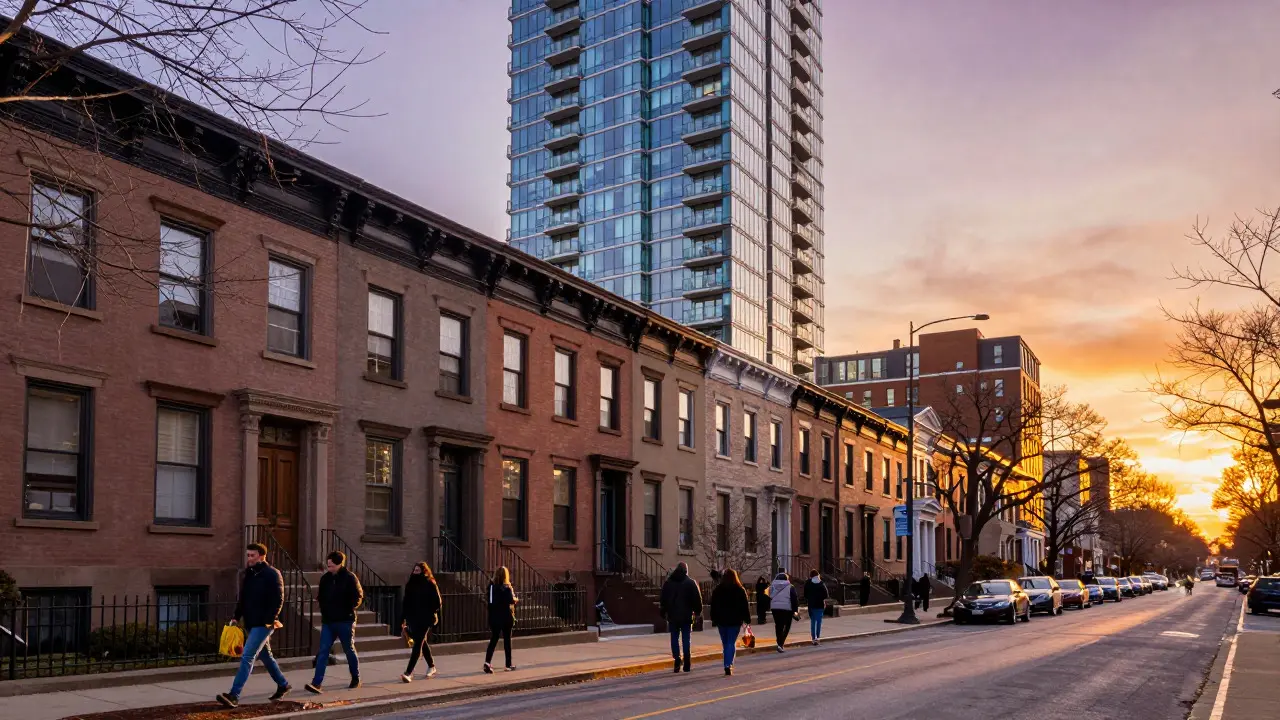
Your current life stage is the strongest predictor of satisfaction. Young couples without children often prefer condos for their access to nightlife, dining, and public transit. The ability to walk to work or social events reduces car dependency, saving money on gas and parking. Parking in downtown Chicago can cost $30 to $50 per day for commercial lots, making off-street residential parking in a condo a valuable perk.
Families with school-age children lean toward single-family homes. Proximity to top-rated schools in districts like Naperville or Schaumburg drives demand for detached houses. The space for a backyard, a second bathroom, and a dedicated office room becomes essential. Furthermore, zoning laws in many Chicago suburbs restrict short-term rentals, protecting neighborhood stability for families.
Investors have a different calculus. Condos in high-demand areas like the Gold Coast or West Loop offer higher rental yields per square foot due to proximity to employment centers. However, you must navigate strict renter rules and potential caps on short-term leasing. Single-family homes in growing suburbs like Arlington Heights provide stable long-term tenants and lower turnover rates, though the initial capital outlay is higher.
Final Thoughts on Making the Right Choice
There is no universal winner between a Chicago condo and a single-family home. The condo wins on convenience, lower entry price, and reduced maintenance hassle. The house wins on privacy, land equity, and customization freedom. To decide, run the numbers on your specific target properties. Calculate the total monthly cost including taxes, insurance, and HOA fees. Then, ask yourself: Do I want to manage my property, or do I want it to manage itself? Your answer to that question will point you to the right side of the ledger.
Are HOA fees deductible on taxes in Chicago?
Yes, HOA fees are generally tax-deductible if you use the property as a primary residence or rental. For primary residences, they are not directly deductible against income, but they reduce your net worth calculations for certain loans. For rental properties, they are fully deductible as a business expense. Consult a CPA for your specific situation.
Which has better appreciation potential in Chicago right now?
Historically, single-family homes in the western suburbs have shown stronger long-term appreciation due to land scarcity and family demand. However, luxury condos in the Loop are recovering strongly as downtown employment returns. For 2026, suburban houses may offer safer growth, while urban condos offer higher liquidity.
Can I convert a condo into a single-family home?
Rarely. Condos are legally distinct units within a larger building. Converting a ground-floor condo to a townhouse style requires buying the entire building or obtaining unanimous consent from all owners, which is nearly impossible. It is easier to buy a pre-converted townhouse or a small detached cottage in a mixed-use district.
What is the average insurance cost for a Chicago condo?
The average HO-6 insurance policy for a Chicago condo costs between $1,200 and $1,800 per year. This covers interior walls, fixtures, and personal property. The building master policy covers the exterior and common areas, so you do not need full replacement cost coverage for the structure itself.
Is it harder to get a mortgage for a condo?
It can be. Lenders approve condos based on the health of the entire association. If the building has too many investor-owned units or a history of delinquencies, the project may not be approved for conventional financing. Fannie Mae and Freddie Mac have specific guidelines for condo projects. Check with your lender early in the process.