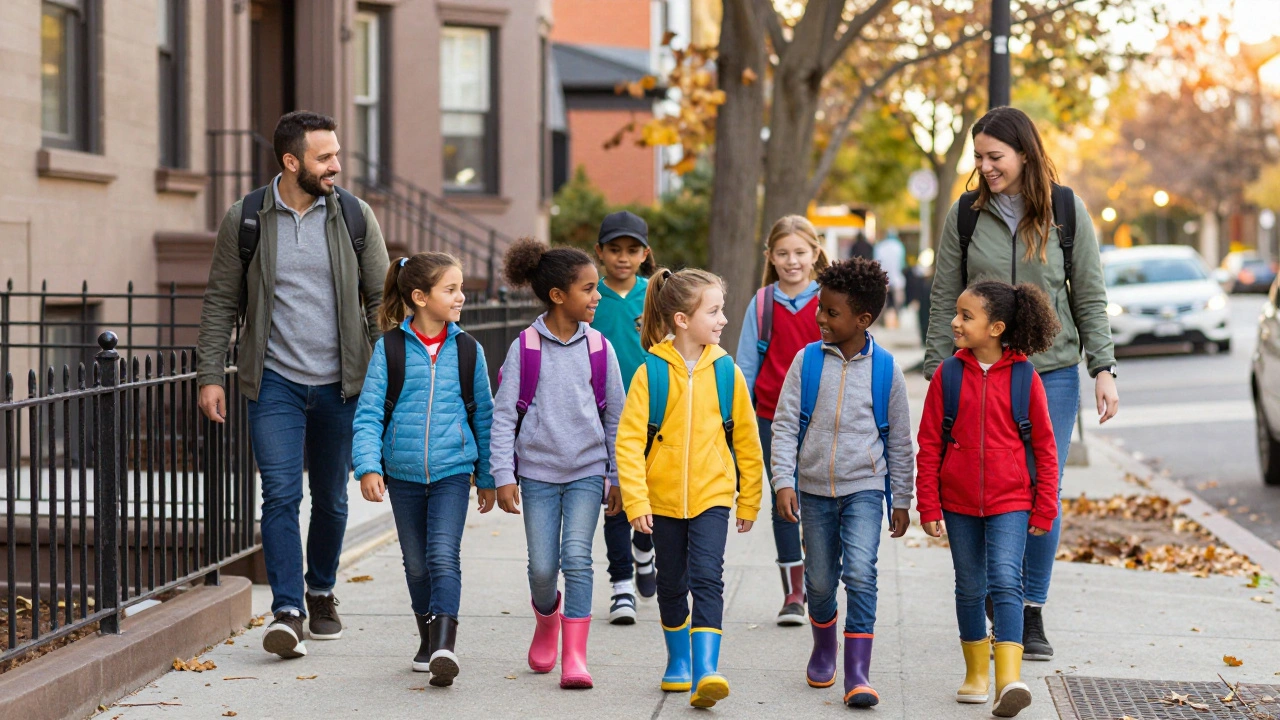
Imagine dropping your kid off at school without the stress of merging into a chaotic drop-off line or worrying about them navigating heavy traffic alone. For many families in Chicago, a city known for its grid layout and walkable neighborhoods, this is becoming a reality through programs like Safe Routes to School initiatives that promote walking and biking to school safely. But how do you actually make it work? It’s not just about telling kids to walk; it’s about creating a structured, safe environment.
The concept of Walking Buses and the role of Crossing Guards might sound simple, but they are powerful tools in urban planning and child safety. In 2026, with increasing concerns over screen time, childhood obesity, and traffic congestion around schools, these methods are more relevant than ever. Let’s break down how these systems work in Chicago specifically, why they matter, and how you can get involved.
What Is a Walking Bus?
A Walking Bus is a group of children who walk to school together along a set route, supervised by adults. Think of it like a regular bus, but instead of a vehicle, it moves on foot. There are designated "stops" where parents drop off their kids, and adult volunteers act as the "drivers" and "conductors," leading and following the group.
This model originated in New Zealand and the UK but has gained significant traction in US cities like Chicago. The beauty of a walking bus is its simplicity. It solves two major problems at once: it provides a safe way for children to commute and builds a sense of community among neighbors. Unlike independent walking, which can be risky for younger children, a walking bus offers structure and supervision.
- Fixed Route: The path is planned in advance, avoiding dangerous intersections or high-traffic areas.
- Scheduled Stops: Parents know exactly when and where to meet the group.
- Adult Supervision: At least two adults (one in front, one in back) ensure no child gets left behind.
The Role of Crossing Guards in Chicago
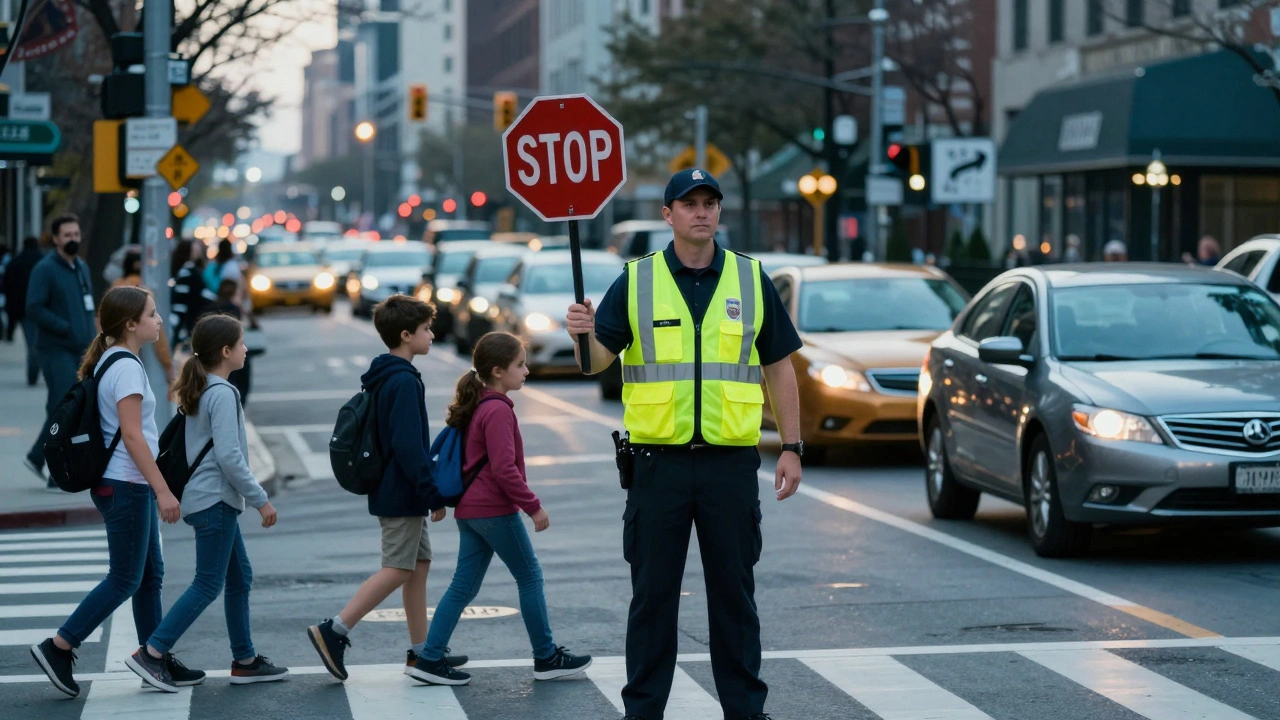
While walking buses handle the journey from home to school, Crossing Guards manage the critical points of intersection. In Chicago, these individuals are often employed by the Chicago Public Schools (CPS) or local municipal departments. They stand at busy corners near school zones, stopping traffic to allow students to cross safely.
Crossing guards are the first line of defense against pedestrian accidents. According to data from the National Highway Traffic Safety Administration, most pedestrian injuries involving children occur within a quarter-mile of their homes. A visible, authoritative presence at key intersections drastically reduces the risk of collisions. In Chicago, crossing guards are typically present during peak arrival and dismissal times, usually between 7:30 AM and 8:30 AM, and 2:30 PM to 3:30 PM.
It’s important to note that crossing guards don’t just wave flags. They enforce right-of-way rules, monitor driver behavior, and sometimes assist with special needs students. Their visibility acts as a deterrent to speeding drivers, making the entire school zone safer for everyone.
Why Chicago Is a Prime Candidate for Safe Routes
Chicago’s urban design makes it uniquely suited for walking and biking initiatives. The city’s famous grid system means streets are predictable and navigation is straightforward. Unlike cities with winding, hilly roads, Chicago’s flat terrain encourages walking. However, the density also brings challenges: heavy traffic, narrow sidewalks, and aggressive driving.
Programs like Safe Routes to School aim to mitigate these risks. The federal Safe Routes to School program, which receives funding from the Federal Highway Administration, supports infrastructure improvements such as:
- Improved sidewalks and curb ramps
- Better lighting and signage
- Speed bumps and traffic calming measures
- Dedicated bike lanes near schools
In Chicago, organizations like Active Transportation Alliance and local neighborhood associations often partner with CPS to implement these changes. The goal is to create an environment where walking isn’t just possible, but preferred.
Benefits Beyond Safety
Safety is the obvious benefit, but the advantages of walking buses and improved crossing guard coverage extend far beyond avoiding accidents. Research shows that children who walk or bike to school arrive more alert and ready to learn. Physical activity before class boosts cognitive function and concentration.
There’s also a social component. Walking buses provide a structured social time for kids to chat with friends before the school day begins. This helps build friendships and reduces anxiety, especially for younger students transitioning from kindergarten to elementary school. For parents, it’s a chance to connect with other families in the neighborhood, fostering a stronger community network.
Environmentally, reducing car trips to school lowers carbon emissions and decreases congestion around school entrances. During peak hours, school zones in Chicago can become gridlocked. Every family that chooses to walk instead of drive contributes to smoother traffic flow for emergency vehicles and other commuters.
How to Start a Walking Bus in Your Neighborhood
If you’re interested in starting a walking bus in your Chicago neighborhood, here’s a step-by-step guide based on best practices from successful programs:
- Gauge Interest: Talk to other parents at school events or PTA meetings. See if there’s a critical mass of families willing to participate.
- Plan the Route: Map out a safe path from multiple pickup points to the school. Avoid highways and busy intersections. Use apps like Walk Score or Google Maps to identify potential hazards.
- Recruit Volunteers: You need at least two adult supervisors per group. One leads, one follows. Ensure all volunteers undergo background checks if required by local regulations.
- Set a Schedule: Decide on specific days and times. Consistency is key. Start with a trial period, such as two weeks, to assess feasibility.
- Promote the Program: Share the schedule and route with other parents. Use school newsletters, social media groups, and flyers posted at local businesses.
- Evaluate and Adjust: After the trial period, gather feedback. Did the route work? Were there any safety concerns? Make adjustments as needed.
Many Chicago schools have existing frameworks for this. Check with your school’s administration or PTA to see if they already have resources or partnerships with organizations like Safe Routes to School USA.

Challenges and Solutions
No system is perfect, and walking buses face challenges. Weather is a big one. Chicago winters are harsh, with snow and ice making walking difficult. Summer heat and humidity can also be problematic. To address this, some programs suspend operations during extreme weather or provide guidance on appropriate clothing.
Another challenge is consistency. If too few children show up, the walking bus may feel less appealing. Building a strong initial base of participants is crucial. Also, ensuring that volunteers are reliable requires clear communication and appreciation for their efforts.
Traffic remains a persistent issue. Even with crossing guards, drivers may ignore stop signs. Advocacy for stricter enforcement and better infrastructure is ongoing. Parents can advocate for their schools by attending city council meetings and requesting additional safety measures like flashing beacons or raised crosswalks.
| Method | Safety Level | Physical Activity | Cost | Community Impact |
|---|---|---|---|---|
| Car Drop-off | Moderate (Traffic Risks) | Low | High (Fuel, Time) | Low (Congestion) |
| Walking Bus | High (Supervised) | High | Free | High (Social Bonds) |
| Independent Walking | Variable (Age Dependent) | High | Free | Low |
| School Bus | High | Low | Subsidized | Moderate |
Getting Involved in Chicago’s Safe Routes Initiatives
You don’t have to start from scratch. Chicago has several organizations dedicated to improving school safety and active transportation. The Active Transportation Alliance works closely with communities to advocate for safer streets. They offer workshops and resources for starting walking buses.
Additionally, the Chicago Department of Transportation (CDOT) has programs focused on school zone safety. They conduct audits of school routes and recommend infrastructure improvements. If you notice a particularly dangerous intersection near your child’s school, report it to CDOT. Your input can lead to tangible changes like new crosswalks or signal upgrades.
Local neighborhood associations also play a vital role. Many have committees dedicated to youth safety and can help coordinate volunteer efforts. Engaging with these groups amplifies your voice and connects you with like-minded residents.
Future of School Safety in Chicago
As Chicago continues to grow, the demand for safe, sustainable transportation options will increase. Emerging trends include the integration of technology, such as GPS tracking for walking buses and smart traffic signals that prioritize pedestrians during school hours. These innovations promise to enhance safety and efficiency.
Moreover, there’s a growing recognition of the mental health benefits of active commuting. Reducing screen time and increasing outdoor exposure contributes to overall well-being. Schools are increasingly incorporating physical activity into their daily routines, and walking to school fits seamlessly into this philosophy.
The collaboration between parents, schools, and city officials is essential for sustained success. By working together, we can create a culture where walking to school is not just an option, but a cherished part of the daily routine.
Is it safe to let my child walk to school alone in Chicago?
It depends on the child's age, maturity, and the specific route. Generally, experts recommend that children under 10 should not walk alone in urban environments due to traffic complexities. Walking buses provide a supervised alternative that is safer for younger children. Always assess the route for hazards like busy intersections and poor lighting.
How do I find a walking bus near me?
Check with your child's school PTA or administration. Many schools list existing walking bus schedules on their websites or newsletters. You can also contact the Active Transportation Alliance or local neighborhood associations for information on established groups in your area.
Who pays for crossing guards in Chicago?
Crossing guards are typically funded through a combination of Chicago Public Schools budgets and municipal funds from the City of Chicago. Some schools may also receive grants from state or federal Safe Routes to School programs to support staffing and infrastructure improvements.
What happens if it snows during walking bus season?
Most walking bus programs have policies for extreme weather. In Chicago, heavy snow or ice may lead to temporary suspension of the walking bus. Parents should check with the group leaders for updates. Proper winter gear, including boots and reflective clothing, is essential for colder months.
Can I volunteer as a crossing guard?
Yes, many schools rely on parent volunteers for crossing guard duties, especially during peak times. Contact your school's main office or PTA to inquire about volunteer opportunities. Training is usually provided, and background checks may be required.