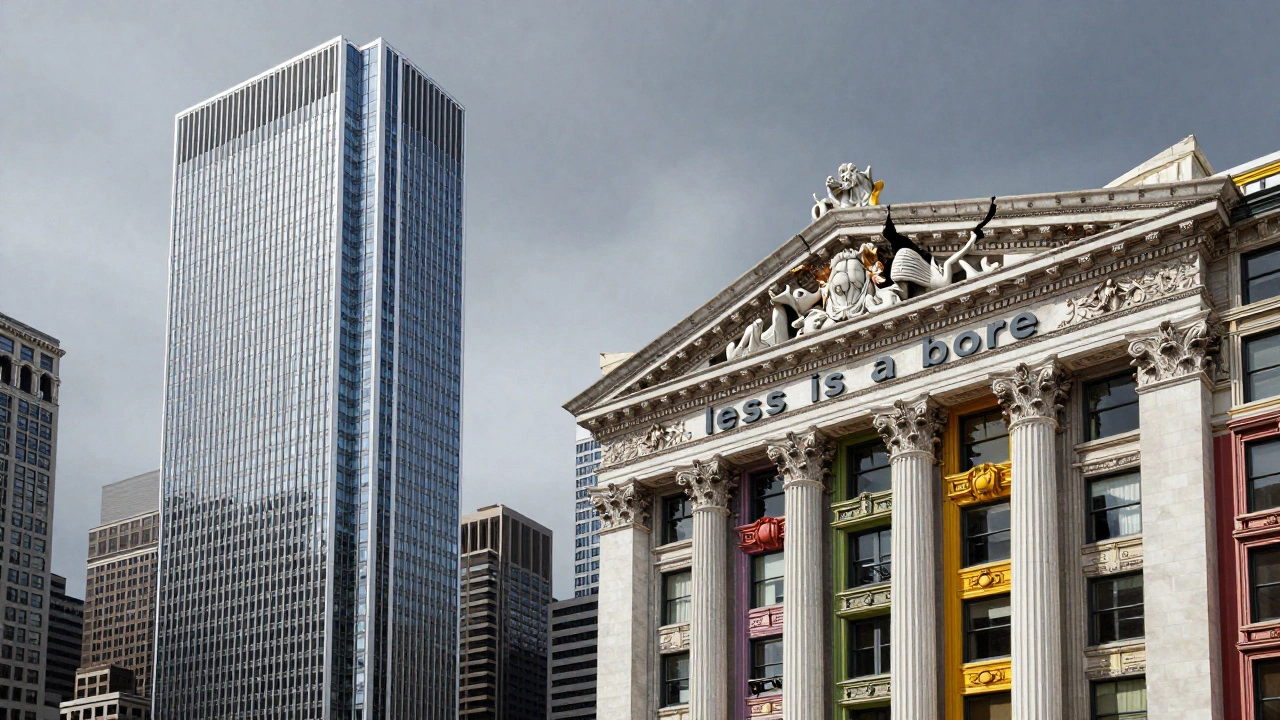
Chicago is famous for inventing the skyscraper. But if you look closely at the city’s skyline from the late 1970s through the 1990s, you’ll see a rebellion against that very invention. This was the era of Postmodern Architecture, a movement that rejected the cold, glass-box minimalism of Modernism in favor of ornament, history, and irony. In Chicago, this wasn’t just an aesthetic choice; it was a philosophical argument about what buildings should mean to the people who live among them.
The shift didn’t happen overnight. By the mid-1970s, architects and critics were tired of the International Style’s rigid rules. They wanted buildings that spoke human language, not just engineering efficiency. Chicago, with its deep roots in structural innovation, became a surprising laboratory for this new, playful approach. The result is a collection of icons that define the city’s character today-buildings that are often misunderstood, frequently debated, but undeniably influential.
The Break from Modernism
To understand why Postmodernism took hold in Chicago, you have to understand what it was reacting against. For decades, the dominant style was Modernism, championed by figures like Ludwig Mies van der Rohe. His mantra, "less is more," led to sleek, steel-and-glass towers that prioritized function over form. While beautiful in their own right, these buildings often felt impersonal and disconnected from their surroundings.
Robert Venturi is an American architect whose work helped define Postmodernism. In his 1966 book *Complexity and Contradiction in Architecture*, Venturi famously declared, "Less is a bore." He argued that architecture should embrace complexity, ambiguity, and historical reference. This idea resonated deeply in Chicago, where architects began experimenting with classical elements like columns, pediments, and cornices-but twisted them into something new and unexpected.
This wasn’t about copying the past. It was about dialogue. A Postmodern building might use a giant column not to support weight, but as a decorative statement. It might feature bright colors or unconventional materials to challenge the monotony of gray concrete. The goal was to create spaces that engaged with viewers on an emotional level, rather than just serving as containers for office space.
Iconic Structures That Defined the Era
Several buildings from the 1980s and 1990s stand out as quintessential examples of Postmodernism in Chicago. Each one tells a different story about how architects interpreted the movement’s principles.
| Building Name | Architect | Year Completed | Key Features |
|---|---|---|---|
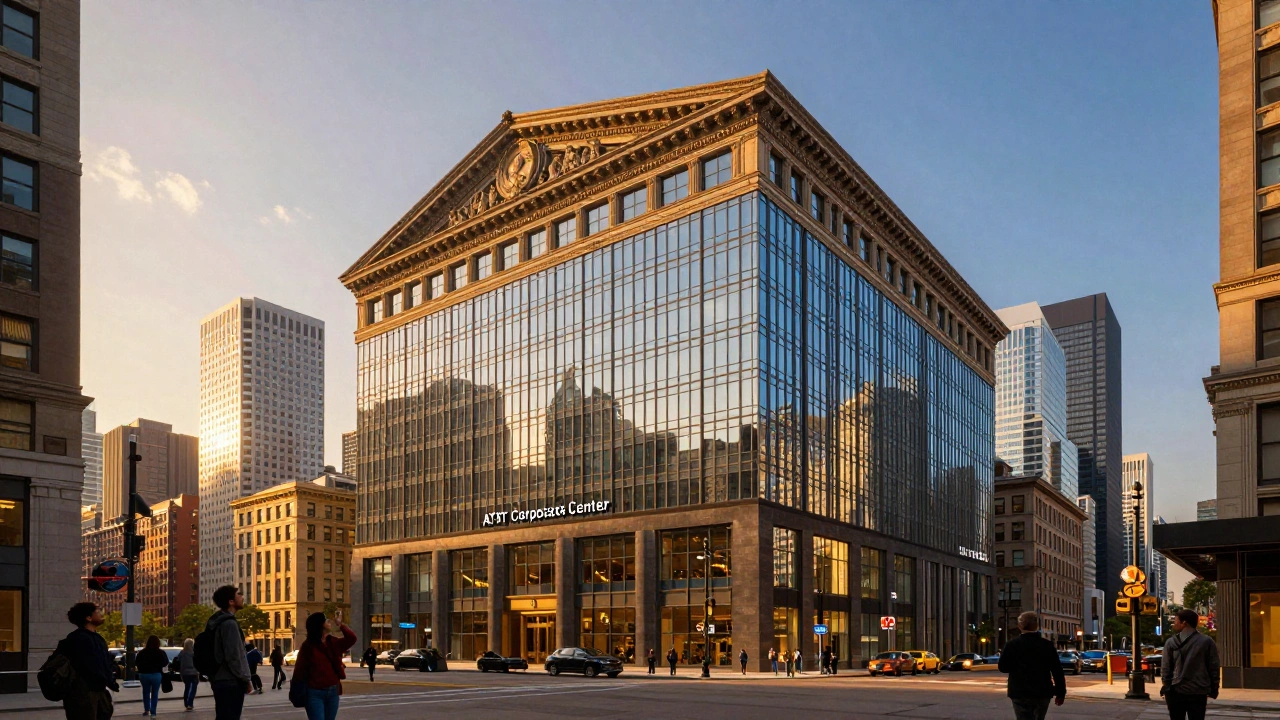
| AT&T Corporate Center | Philip Johnson | 1984 | Chippendale-style broken pediment top |
| Aon Center | Kohn Pedersen Fox | 1973 (renovated 1980s) | White granite facade, controversial lighting |
| Citigroup Center | John Portman & Associates | 1985 | Sloped roof, colorful interior atrium |
| One Prudential Plaza | Kohn Pedersen Fox | 1990 | Glass curtain wall with bronze accents |
The most famous example is arguably the AT&T Corporate Center is a high-rise office building designed by Philip Johnson. Completed in 1984, its most striking feature is the top section, which resembles a broken pediment-a classical architectural element flipped upside down. This bold move signaled a clear break from the flat-roofed skyscrapers that dominated the skyline. Johnson didn’t just want to build a tower; he wanted to make a statement about the revival of historical forms.
Another notable structure is the Aon Center is a skyscraper located in downtown Chicago. Originally completed in 1973, its white marble facade became iconic in the 1980s. However, it also sparked controversy due to its reflective surface, which caused glare issues for nearby residents and drivers. This highlights a common critique of Postmodernism: while aesthetically interesting, some designs prioritized visual impact over practical considerations.
Philosophical Underpinnings and Design Principles
Postmodern architecture isn’t just about looks; it’s rooted in specific philosophical ideas. Architects during this period were influenced by theorists like Charles Jencks, who wrote *The Language of Post-Modern Architecture* in 1977. Jencks argued that architecture had died when the Pruitt-Igoe housing complex was demolished in 1972-a symbol of Modernism’s failure to meet social needs.
In response, Postmodern architects focused on three key principles:
- Historical Reference: Using elements from past styles (Greek, Roman, Gothic) but reinterpreting them in contemporary contexts.
- Contextualism: Designing buildings that respond to their immediate environment, including neighboring structures and cultural heritage.
- Irony and Playfulness: Incorporating humor, surprise, and contradiction to engage viewers intellectually and emotionally.
For instance, the James Stirling is a British architect known for his postmodern works. Though not based in Chicago, his influence was felt globally. His design for the Staatsgalerie Stuttgart demonstrated how classical proportions could be combined with vibrant colors and industrial materials. Chicago architects adopted similar strategies, creating buildings that felt both familiar and strange.
Critiques and Controversies
No architectural movement is without its critics. Postmodernism faced significant backlash from both supporters of Modernism and advocates for newer styles like Deconstructivism. Some argued that Postmodern buildings were superficial, relying on decorative gimmicks rather than genuine innovation. Others claimed they lacked coherence, mixing styles haphazardly without a clear vision.
One major criticism centers on sustainability. Many Postmodern buildings from the 1980s and 1990s were constructed using energy-intensive materials and technologies. As environmental concerns grew in the 2000s, these structures came under scrutiny for their carbon footprints. Retrofitting them to meet modern green standards has proven challenging and expensive.
Additionally, there’s the issue of accessibility. While Postmodernism aimed to make architecture more relatable, some designs inadvertently created barriers. Complex facades and non-standard layouts can confuse navigation for individuals with disabilities. This tension between aesthetics and functionality remains a topic of debate among urban planners and architects today.
Legacy and Influence on Contemporary Design
Despite the controversies, Postmodern architecture left an indelible mark on Chicago’s skyline and beyond. Its emphasis on context and historical reference paved the way for later movements like New Urbanism, which prioritizes walkable neighborhoods and mixed-use developments. Today’s architects continue to draw inspiration from Postmodern techniques, blending old and new in innovative ways.
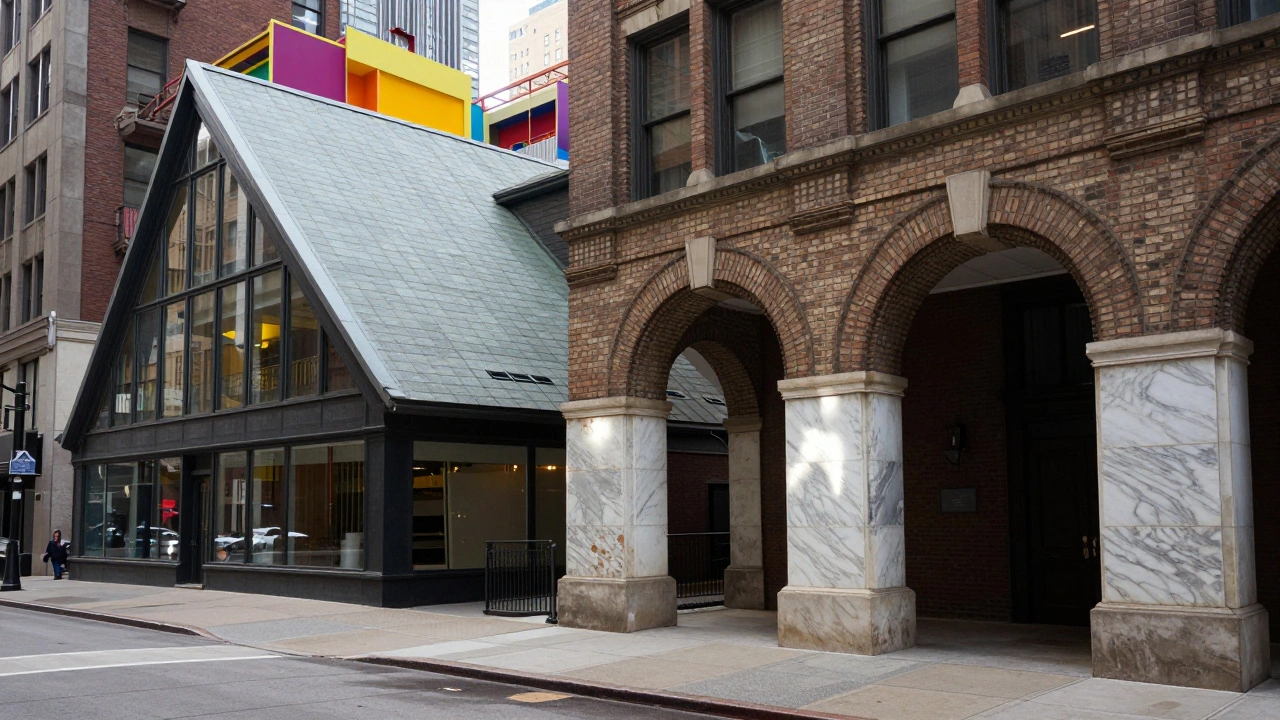
Consider the recent renovations of historic districts in Chicago. Developers often incorporate Postmodern elements-such as exaggerated arches or patterned brickwork-to honor the area’s heritage while adding contemporary flair. This approach ensures that cities evolve without erasing their identity.
Moreover, the movement’s focus on storytelling through design has influenced digital architecture and virtual environments. Video games and film sets frequently mimic Postmodern aesthetics to evoke nostalgia or surrealism. This cross-disciplinary impact underscores the enduring relevance of the style.
Exploring Postmodern Chicago Today
If you’re interested in experiencing Postmodern architecture firsthand, Chicago offers numerous opportunities. Start with a walking tour of the Loop, where many landmark buildings are concentrated. Pay attention to details like window shapes, material textures, and rooftop designs. Compare these features with nearby Modernist structures to appreciate the contrast.
Visit museums like the Art Institute of Chicago, which houses exhibitions on architectural history. These resources provide deeper insights into the motivations behind specific designs and the broader cultural shifts they reflect. Engaging with experts and fellow enthusiasts can enrich your understanding and spark new perspectives.
Finally, consider supporting preservation efforts for Postmodern landmarks. Like any architectural style, it faces threats from demolition and redevelopment. Advocacy groups play a crucial role in protecting these sites for future generations. By participating in local initiatives, you contribute to maintaining the diversity of Chicago’s built environment.
What defines Postmodern architecture?
Postmodern architecture is characterized by its rejection of Modernist minimalism in favor of ornamentation, historical references, and contextual sensitivity. It embraces complexity, irony, and playfulness to create buildings that communicate meaning beyond mere function.
Why did Postmodernism emerge in the 1980s?
Postmodernism emerged as a reaction against the perceived failures of Modernism, particularly its inability to address social and cultural needs. Architects sought to reintroduce humanity and history into design, responding to growing dissatisfaction with sterile, uniform environments.
Is the AT&T Building still standing?
Yes, the AT&T Corporate Center remains a prominent feature of Chicago’s skyline. Despite initial controversy over its unconventional design, it has become an accepted part of the city’s architectural landscape.
How does Postmodernism differ from Modernism?
While Modernism emphasizes simplicity, functionality, and universal solutions, Postmodernism values diversity, decoration, and site-specific responses. Modernists believed "form follows function," whereas Postmodernists argue that form can convey multiple meanings independently of function.
Are there any sustainable Postmodern buildings?
Some Postmodern buildings have been retrofitted with sustainable technologies, such as solar panels and improved insulation. However, many original constructions lack inherent eco-friendly features, making adaptation costly and technically challenging.